
Field Heat, Issue 01, The first mile. Web edition.
Gauri Sathe’s quarterly on fruit, vegetables and the hours between the field and the cold room
Issue 01, The first mile
Why I now spend more at the farm gate than in the cold store
- Six seasons of our own logbooks
- Five things I’d check before renting a cold room
- What I got wrong last year, scored
On the cover: Gauri Sathe. Photograph: Srijit Mudi, Pexels.Designed by DigiMagz, digimagz.com
Before we start
Why I am writing this
For thirteen years I have explained the same things on phone calls, in pack-house sheds and at the back of trucks at two in the morning. A grower asks why his grapes were turned away in Mumbai when they left Dindori looking perfect. A buyer asks why our rate went up. A banker asks why a cold-chain company is spending money on shade nets.
This magazine is my attempt to answer once, properly, in writing. It is for the growers who send us their fruit, the buyers who receive it and the people who lend us money and want to know what we do with it. Some of you will disagree with me. Please write and say so; the best letters go in the next issue.
Each issue takes one idea and stays with it. This first one is about the first mile: the hours between the knife and the first cold room, where I now think most of the damage is done. Our own numbers are on page 6, a grower’s story is on page 8, and on page 10 you will find the guesses I made last year that turned out wrong.
I write every word myself. My colleagues check the numbers, and they are not gentle about it.
Gauri Sathe
Founder, Sathe Cold Chain, Pune
Forward to a colleague on WhatsApp
Who this is for
Growers, traders and buyers who move fruit and vegetables through Maharashtra, and anyone who has asked me what a cold chain actually does. Four issues a year, in print and as a link you can forward.
How to reach me
Write to letters@fieldheat.example, or reply on WhatsApp to the number this issue came from. I read everything and answer what I can in the next issue.
A DigiMagz sample. The author, her company, the people in it and every figure about them are fictional. The photographs are licensed stock, credited where they appear.
The essay
The first six hours
For thirteen years I thought my business was the cold room. It turns out most of the damage is done before the fruit ever reaches one.
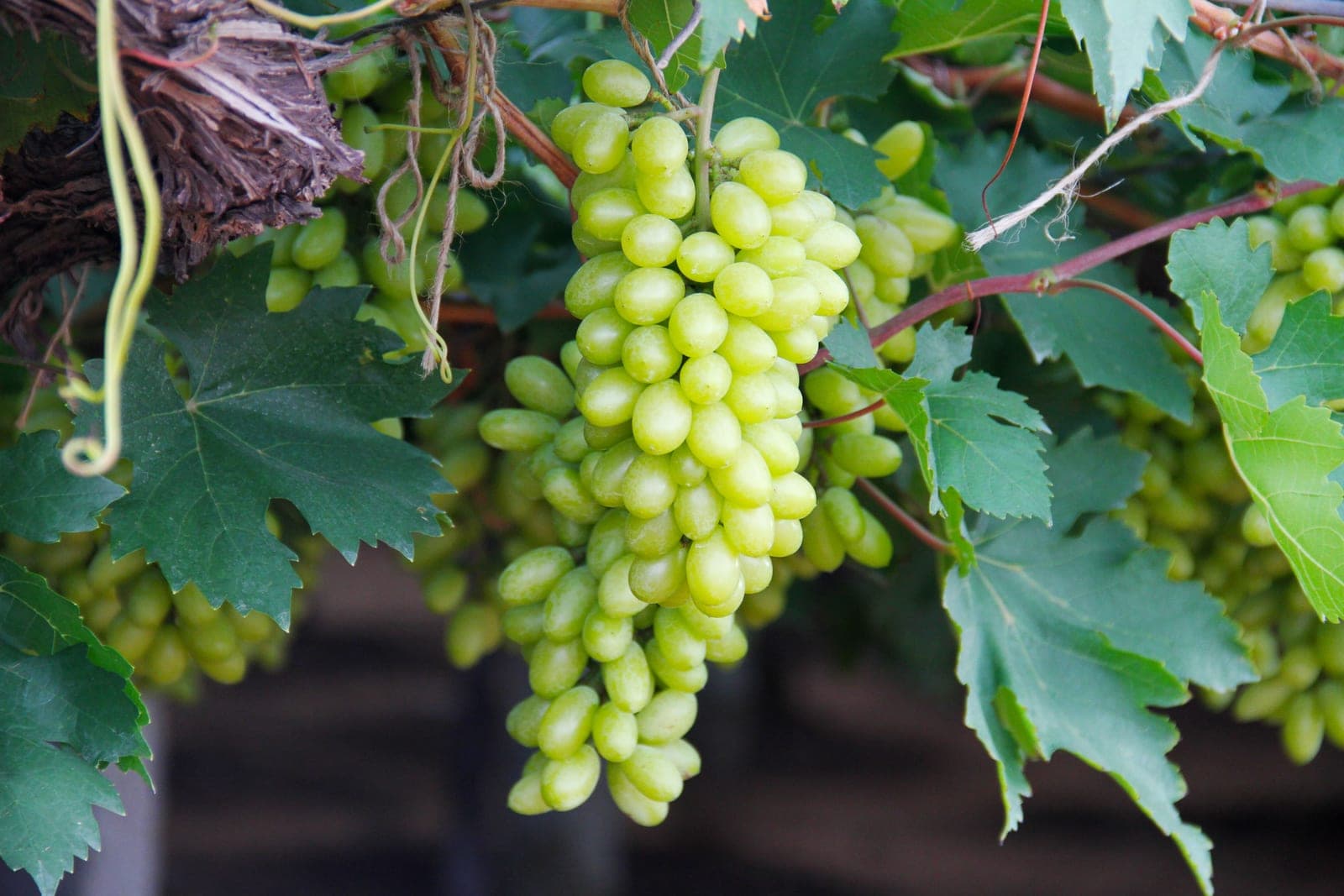
In the spring of 2018 I stood in a buyer’s yard in Vashi and watched a man in a vest open one of our trucks. The thermometer on the door read four degrees. The grapes inside had been at four degrees for nine hours, exactly as we had promised. He lifted a box, pressed two berries between his fingers and set the whole pallet aside. The berries had gone soft at the stem, and the stems had turned from green to brown.
Nothing had gone wrong on our watch. The truck was cold, the driver had written down the temperature every hour, and the store at Chakan where the grapes had waited overnight was running as it should. What went wrong had happened earlier, in a vineyard near Dindori, between about eleven in the morning and six in the evening, when the boxes sat at the end of a row waiting for a tempo.
I had built a company around the wrong end of the journey.
What the field leaves in the fruit
A grape or a tomato does not stop living when it is cut. It keeps breathing, using up its own sugars and water, and it breathes faster when it is warm. Fruit picked at noon carries the heat of the field with it; growers and engineers call this field heat. Until that heat is taken out, the fruit is ageing quickly, and no amount of cold later in the journey gives those hours back.
None of this is new. Every book on post-harvest handling says it, and I had read most of them. I had even taught it, in a borrowed classroom in Pune, to a batch of second-year food technology students. But knowing a thing and arranging your money around it are different. For our first six years, almost every rupee we raised went into the part of the chain a customer could see: the cold store, the trucks, the logger on the truck door.
Why we built it backwards
There were reasons, and they were not foolish. A cold store is something a bank understands. It has walls, a capacity in pallets and a rate card. A buyer can visit it. A shade net at the edge of a vineyard, a stack of plastic crates or a small shed with a pre-cooler is harder to explain on a loan application, and harder still to charge for.
We also listened to our customers, which is usually good advice. The buyers asked for cold trucks, so we bought cold trucks. Nobody asked us what time the grapes had been picked, because nobody at the receiving end could see it.
The result was a chain that was very cold in the middle and warm at the start. Our logbooks from those years show the same pattern season after season: the fruit spent longer between the vine and our first cold room than it spent inside our trucks.
What we changed
In 2019 we put a pre-cooler at each of our pack-houses, so that fruit lost its field heat within an hour of arriving instead of waiting for space in the cold store. A pre-cooler pulls cold air through the stacked crates at speed; Nitin explains how on page 9. At the same time we moved our collection points closer to the farms, so that the first journey was ten minutes on a farm road, not two hours on the highway.
Then we began asking growers to pick earlier in the day. It is the cheapest change of all, and the hardest to make.
The pre-coolers were the easy part. They are machines; you buy them, install them and train someone to run them. The collection points meant renting sheds in villages, which meant a sarpanch, a landlord and a power connection for each one. Picking earlier meant changing the habits of people who have farmed for longer than I have been alive.
None of it showed up in our rate card, and for two seasons it cost us money. Then the rejections began to fall.
What it cost, and who paid
I want to be plain about the money, because growers ask and bankers ask more. The pre-coolers, the rented sheds and the crates cost us about as much as one more chamber at Chakan would have. For two seasons that money earned nothing we could show on an invoice. Our rates did not change, because I did not yet know whether any of it would work, and it did not seem fair to charge growers for my experiment.
The growers paid in a different way. Picking at six means a team that arrives at half past five, and that team wants to be paid for the early start. Some growers found that easy; most did not. A few left us for a cold store with a lower rate and no questions about picking times, and two of them came back the following season.
The buyers paid nothing extra at first. They simply sent back fewer boxes, a saving they noticed and we did not, at least not on paper. It took a full season of logs to show them where the saving came from, and another season to agree a rate that shares it.
What the numbers say
Our logbook figures are on page 6, and I have tried not to dress them up. The short version is this. When grapes reached one of our pre-coolers within three hours of being cut, buyers turned away fewer than two boxes in a hundred. When they took more than twelve hours, it was closer to one box in seven. The truck and the cold store were the same in both cases. Only the first hours were different.
Six hours is not a magic line. It is where our own figures begin to climb steeply, and it is a target a grower can hold in his head: pick by ten, in the shed by eleven, in the pre-cooler by one.
What I still do not know
I do not know how far this goes for the crops we handle less often. Our numbers for grapes and pomegranates are good because we move so many of them. For greens, which wilt within hours, I suspect the line is much shorter than six hours; for onions, which we do not cool at all, it may not exist. I would rather say that plainly than stretch a grape number to cover everything.
Nor do I know how to do this for a grower with two acres and no tractor, whose crop leaves the farm on a shared tempo at whatever hour the tempo comes. Many of the growers who supply us farm like that. The collection sheds help them more than anyone, but a shed still has to be within reach, and we cannot rent one in every village. If you have solved this somewhere, I would like to hear how.
What I would tell a new cold-chain company
Spend your first rupee at the farm gate, not at the city end. Measure the time from the knife to the first cold room on every load, and print it on the delivery note so the buyer sees it too. Pay your collection staff for early arrivals, not for full trucks.
And go and stand in a vineyard at noon, with your hand on a box of grapes that has been waiting two hours for a tempo. You will understand the business better than any spreadsheet can tell you.
I still believe in cold stores. We run one at Chakan and it is full for most of the year. But a cold store can only keep what the first six hours have left it.
Our own numbers. Sample figures
What our own logbooks say
Every load we move carries a paper log: when the fruit was cut, when it reached the shed, when it went into the pre-cooler and how much the buyer turned away. Here is last season, and six seasons of the number I watch most closely.
Tap a bar to read it.
Tap a season to read it.
Tap a stage to read it.
How we keep the log
The collection supervisor writes the cutting time on a card that travels with each stack of crates. The shed writes its time on the same card, and so does the pre-cooler operator. The buyer’s rejection note comes back to us by WhatsApp and is matched to the card the same week.
A time is only as good as the person who wrote it, so twice a season we check a sample of cards against the phone photographs our supervisors take at the field edge. Last season about one card in forty was wrong by more than half an hour; we count those loads, and we tell you so.
The rejection figure is the buyer’s, not ours. When a buyer and our supervisor disagree about a pallet, the buyer’s count goes in the log and the dispute goes in a separate column, so that the charts above never flatter us.
The 2025–26 season at a glance
- Loads moved
- 3,412
- Fruit and vegetables handled
- 38,600 tonnes
- Pack-houses with pre-coolers
- 3: Dindori, Narayangaon, Sangola
- Cold store
- 2,400 pallets, Chakan
- Refrigerated trucks
- 31
- Growers who supplied us
- 2,140
- People on the payroll
- 186
What I will watch next season
Greens. We began carrying fenugreek and coriander from Narayangaon this year, and their rejections do not follow the grape curve at all; most of the damage seems to happen in the first two hours. I will publish what we find, whether or not it flatters us.
Sample figures. Sathe Cold Chain and every number on this page are fictional, invented for this DigiMagz sample.
Before you sign
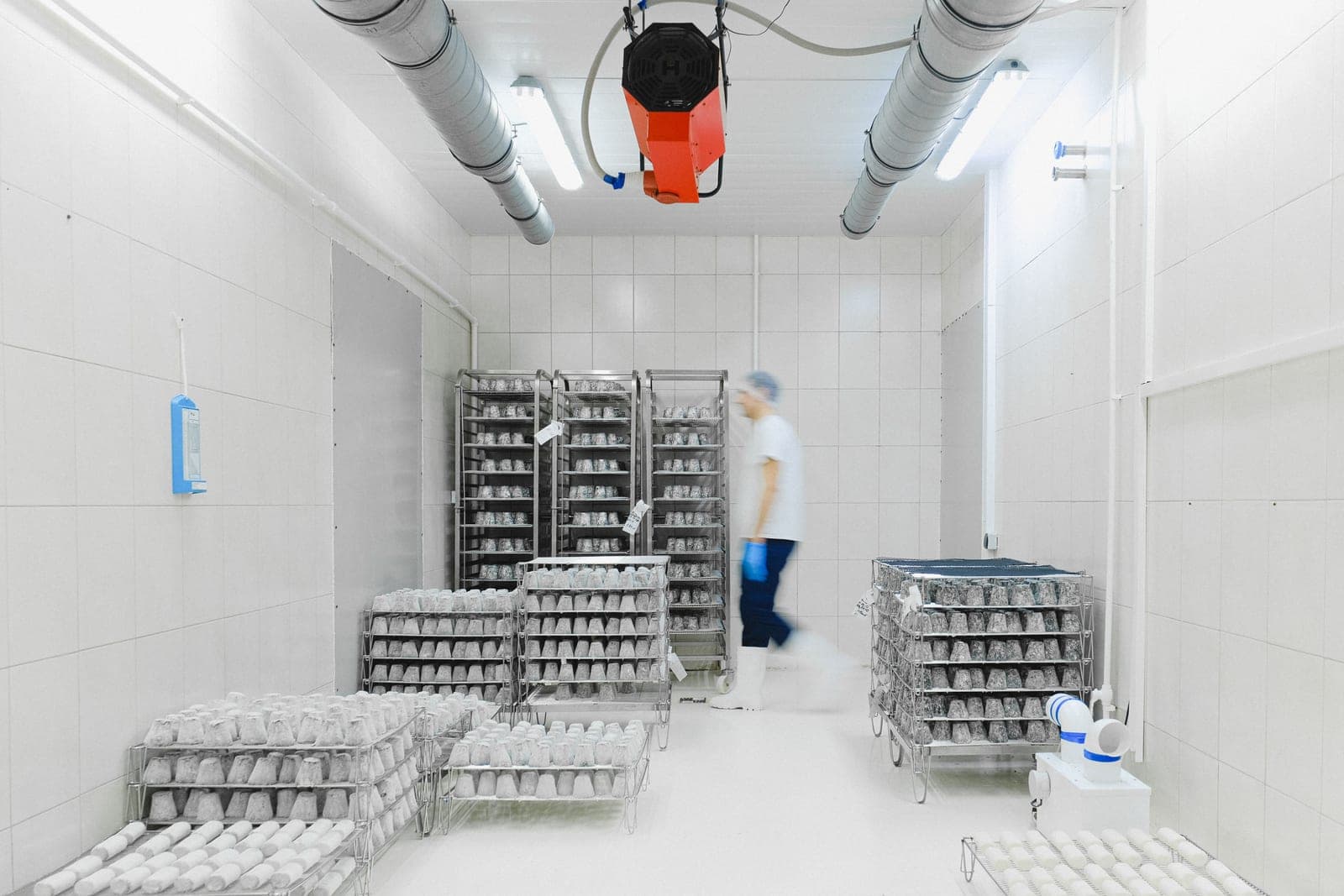
Five things I’d check before renting space in a cold store
Most of these I learned by getting them wrong with our own fruit, in other people’s rooms, before we had one of our own.
Ask for the temperature log, not the setpoint
Any room can be set to two degrees. What matters is what it actually held, so ask for a month of logger readings from the room you will use, door openings included. If the operator has no logger, or will only show you the display on the wall, you have learned something useful.
Walk to the back of the room
The front row is always cold. Cold air leaves the cooler, crosses the room and has to find its way back, and pallets pushed hard against the far wall block its path. Look for a clear gap at the walls and between rows, and stand at the back for a minute. You will feel the difference with your hand.
Find out who else is in the room
Some fruit gives off ethylene, the gas that ripens fruit. Apples are the usual example. Shared with leafy greens or other sensitive produce, they can age it in days. Ask what else will share your room this month, and ask again before you send the next load.
Ask what happens when the power goes
Every cold store has a generator. Ask how many hours of fuel are kept on site, who is called at three in the morning and how long it takes them to arrive. Then ask when the generator was last run under full load. A long pause before the answer tells you the rest.
Read the rate card for the small lines
The headline rate per pallet is rarely the bill. Look for handling-in and handling-out charges, a minimum period, charges for part pallets and the rate after the first month. Add them up for your own load and season, and compare that number, not the headline.
If you remember only one of the five, make it the first. A room that keeps a log has usually thought about the other four.
Field visit, Sangola
The grower who picks at six
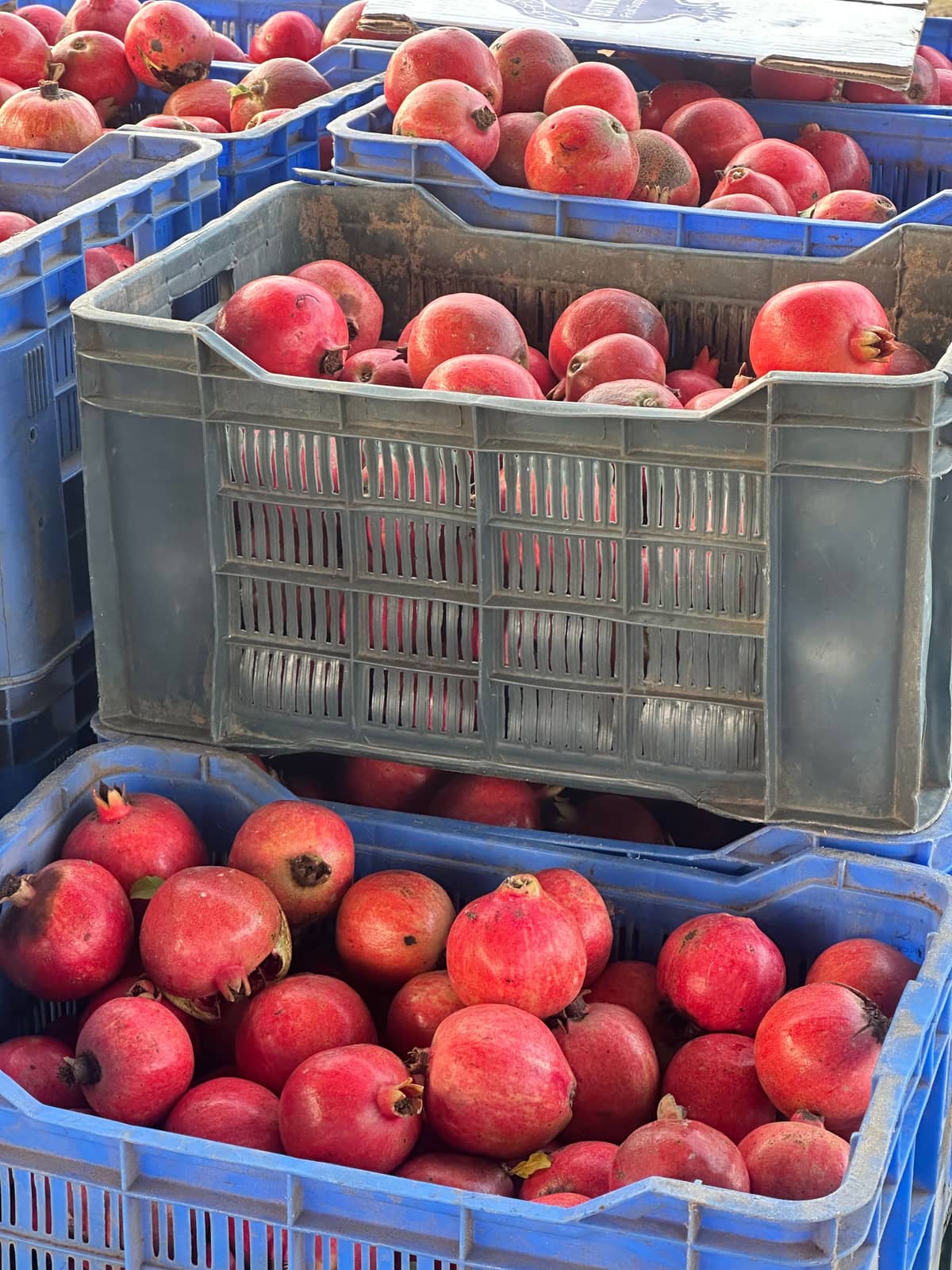
Balasaheb Kokate grows pomegranates on eleven acres near Sangola. Two seasons ago he changed one thing about his day.
Balasaheb Kokate’s orchard is twenty minutes from our Sangola pack-house, on a road that turns to dust by April. He grows Bhagwa, the deep-red pomegranate grown across much of Solapur district, and he has sold to us since 2020.
For his first seasons with us he picked the way his father had: a team of eight from nine in the morning until the light went, crates stacked at the end of each row, one tractor trip to the road in the evening. Our truck collected at six. By then the first crates had been sitting in the open for most of a day.
His fruit looked fine when it left. It did not always look fine when it arrived, and the buyers’ complaint was always the same: cracked skins and a dull colour on fruit that should have shone.
The change
In 2024 he agreed to try something for one month. His team started at six and stopped at ten. The crates went under a shade net at the edge of the orchard as they were filled, and our truck came at eleven. The afternoon went to pruning and spraying, the work an orchard always needs.
“The first week my team thought I had lost my mind,” he told me, sitting on an upturned crate under the net. “By the third week they liked it. Nobody wants to pick in the sun at two o’clock.”
What it did
In the season before the change, buyers turned away about one crate in nine from his orchard. In the two seasons since, it has been about one in twenty-five. He picks the same number of trees in a day; he simply picks them in cooler hours, and the fruit reaches our pre-cooler before lunch.
The shade net cost him less than a single rejected truckload. The hard part, he says, was the habit. “My father picked all day. I picked all day. You have to see the numbers before you believe them.”
We now offer every grower who supplies the Sangola pack-house a morning collection, and eleven of them use it. I would like it to be all of them. Balasaheb has started telling his neighbours, which works better than anything I can say.
Guest voice
Ten minutes with the man who keeps our compressors running
Nitin Bhosale joined us in 2015 as a refrigeration technician and now runs engineering for all three pack-houses and the Chakan store. I asked him the questions growers ask me.

What does a pre-cooler actually do?
It takes the heat out of fruit fast. Fans pull cold air through the stacked crates, so the cold reaches the middle of every box, not only the outside layer. A cold store is built to keep a room cold, not to take heat out of a truckload of warm grapes in a hurry. Put warm fruit straight into the store and the whole room warms up, including everything already inside.
What do you check first on a new site?
The drains. Water from washing crates has to leave the floor fast, or it turns to ice in the pre-cooler and rots the pallets in the store. After the drains, the power line. Only then the machines.
What breaks most often?
Not the machines. Doors. Someone props a door open with a crate during loading and forgets it. I put a buzzer on every door that sounds after ninety seconds. The staff hated it for a month. Now they shut the doors before the buzzer starts.
What should a grower ask before sending fruit?
What time the pre-cooler is free. If three growers arrive at once, the last one waits, and waiting in a yard at noon undoes what he did by picking early. We give slots now, like a doctor.
Gauri says time costs more than cold. Do you agree?
Mostly. Power is our second-biggest bill after diesel. But one rejected truck of grapes costs more than a month of power for a pre-cooler. So she is right, though I would not tell her so directly.
And if you had the money?
Backup power at every collection shed, not only at the pack-houses. In some of our villages the supply goes off for an hour or two in the afternoon, which is exactly when the fruit arrives.
Letters
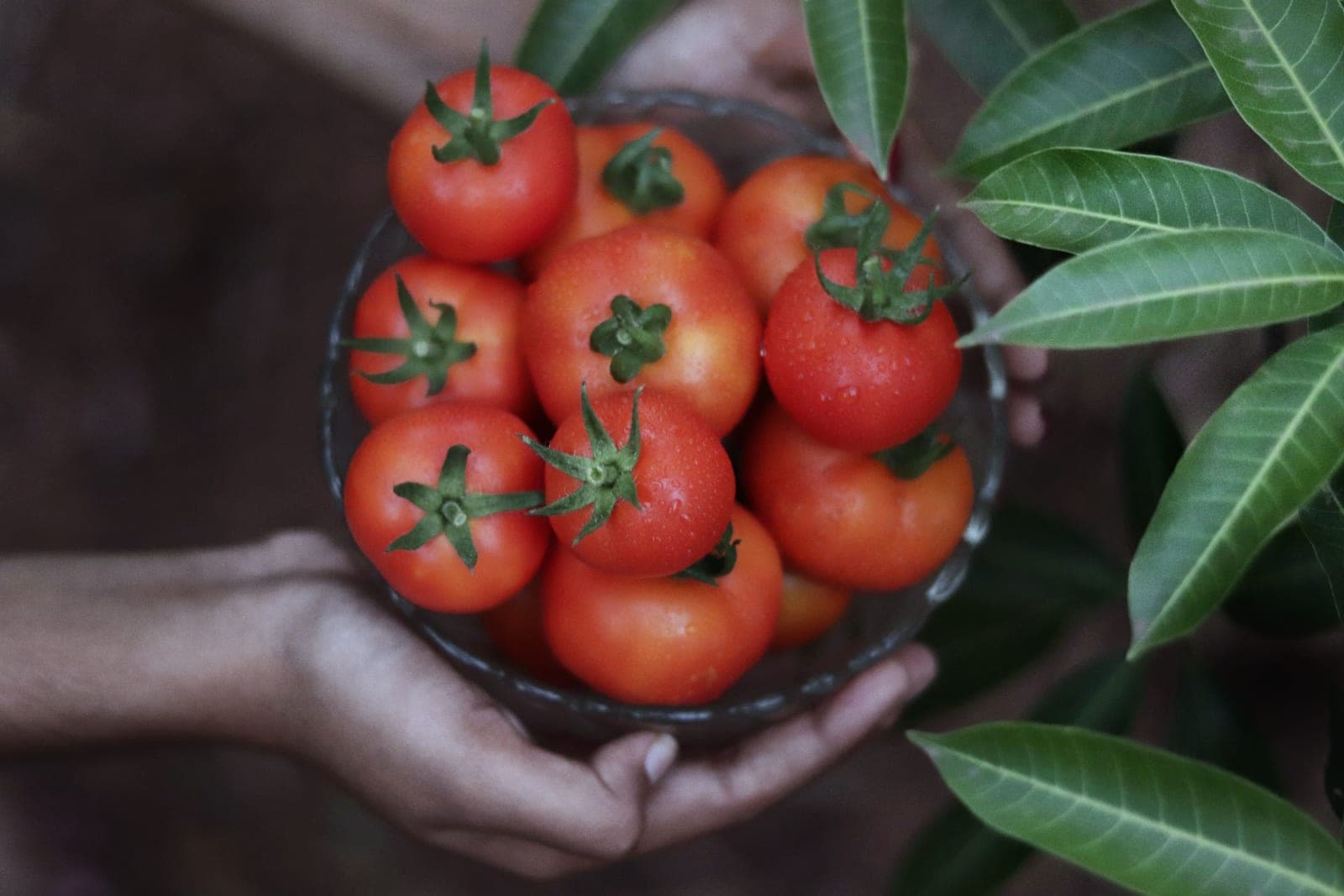
I grow tomatoes near Narayangaon. My trader says pre-cooling is only for export grapes. Is he wrong?
Mahesh, Narayangaon
Gauri replies: Partly. Tomatoes are fussier about being too cold than grapes, and some are damaged below about ten degrees. But they carry field heat like any fruit, and picking early and keeping crates in shade costs nothing. Start there.
You charge more per crate than the cold store near my village. Why should I pay the difference?
A grape grower near Dindori
Gauri replies: Because our rate includes the first hours, which theirs does not. If your rejections are already low, theirs may suit you better. Ask them for their logs, and ask us for ours.
Will this magazine come in Marathi? My father reads only Marathi, and he decides when we pick.
Smita, Baramati
Gauri replies: Yes, from Issue 02. The same pages in Marathi, in print and on WhatsApp. Your father is exactly who I am writing for.
Letters in this sample are fictional. Write to letters@fieldheat.example; we may shorten them.
Scored in public
What I got wrong last year
Every April I send our clients one page of guesses about the season ahead. A bad guess is easy to forget, so from this issue on I will score last year’s in print. These are the five from April 2025, with what happened.
“We will run 40 refrigerated trucks by March 2026.”
We ran 31. Two lenders took longer than we expected, and I chose not to borrow at the rates offered. I would make the same choice again, but the guess was wrong.
Wrong
“Grape growers will ask for pre-cooling before they ask for storage.”
Of the 64 grape growers who came to us for the first time last season, 41 asked about pre-cooling first. Three years ago almost nobody did.
Right
“A solar pre-cooler at a collection shed will pay for itself in two seasons.”
Our trial unit at Sangola works, but on a cloudy day it cools about half the fruit we planned for, and at our volumes it will take four or five seasons to pay back. We are keeping it and learning from it.
Wrong
“The Chakan store will be full by the end of February.”
Full by the middle of March. Two of our larger buyers moved their contracts later in the season.
Half right
“Buyers will pay more for a load that comes with its temperature log.”
Two of our eleven regular buyers did. The rest liked the log and did not want to pay for it. We print it on every delivery note anyway.
Wrong, mostly
Score: 1.5 out of 5.
Next issue
Issue 02, The onion question
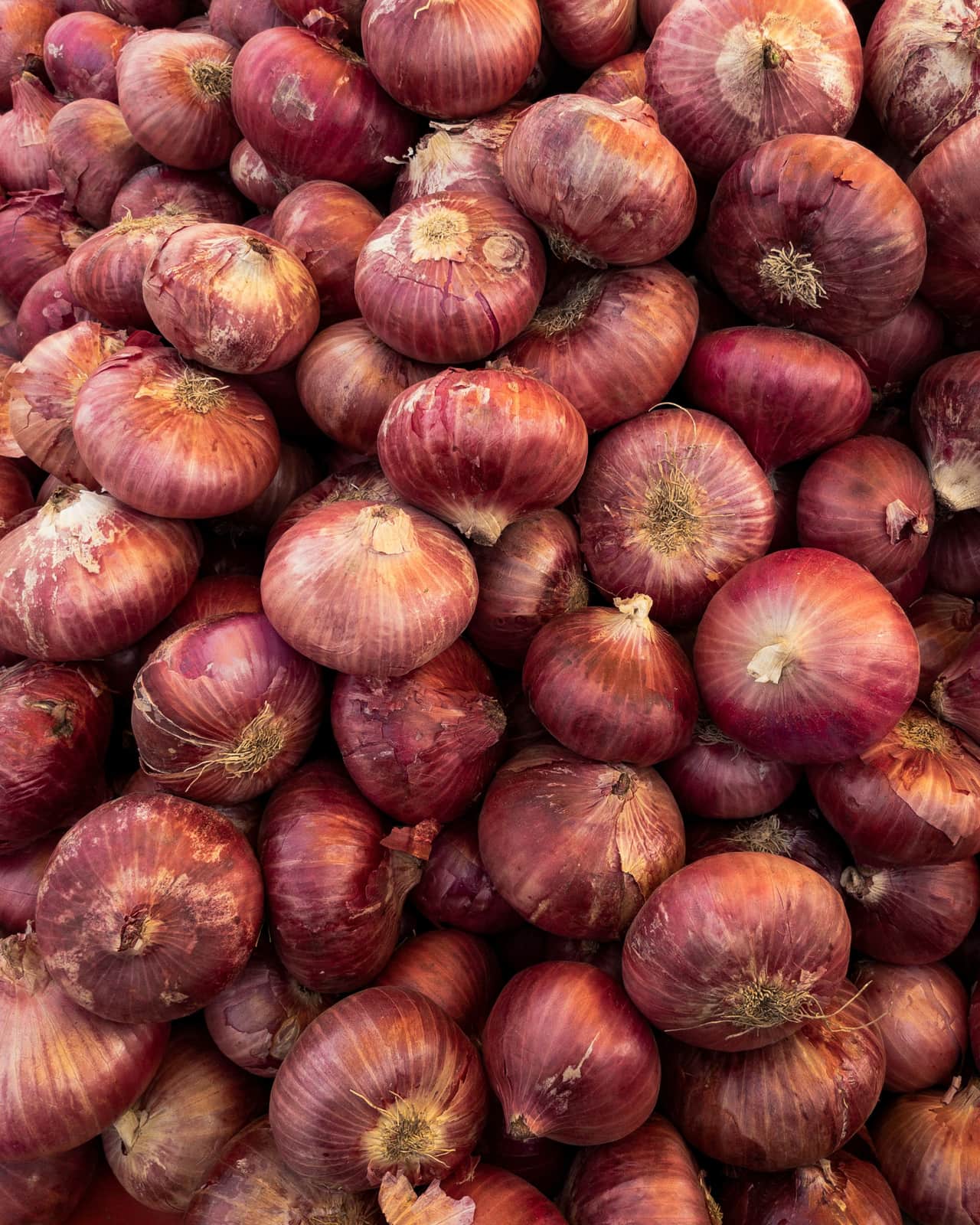
Onions are the one crop we keep out of the cold room. Next time: why, what a good onion store looks like, and the 800 tonnes we lost finding out.
To get it, reply on WhatsApp to the number this issue came from, or write to letters@fieldheat.example. The Marathi edition starts with Issue 02.
Forward to a colleague on WhatsAppRed onions heaped for sale at a market in Srinagar. Photograph: Basit Manzoor, Pexels.
DigiMagz, magazine studio, Pune
Your thinking, in a magazine people keep. This is a sample issue designed and produced by DigiMagz, a magazine design studio in Pune, India.
Magazines, annual reports, brochures, catalogues and keepsakes for organisations in India and abroad.
A DigiMagz sample. The author, her company, the people in it and every figure about them are fictional. The photographs are licensed stock, credited where they appear.
Field Heat, Issue 01, The first mile. Sample issue, not for sale. Photographs licensed from Pexels and credited inside. Titles, people and organisations named in this issue are fictional. DigiMagz is a studio of Baidehi Ravanari Atelier, Pune.