Noor, Issue 01, The wedding issue. Web edition.
Couture for the wedding season
Issue 01, The wedding issue
- 5reds for Decemberand how to wear each one
- Kundan, re-setWhat to look for
- Inside a zardozi atelierShahpur Jat, Delhi
Six pictures of the wedding saree that never goes out, and the guest’s guide to hair and make-up.
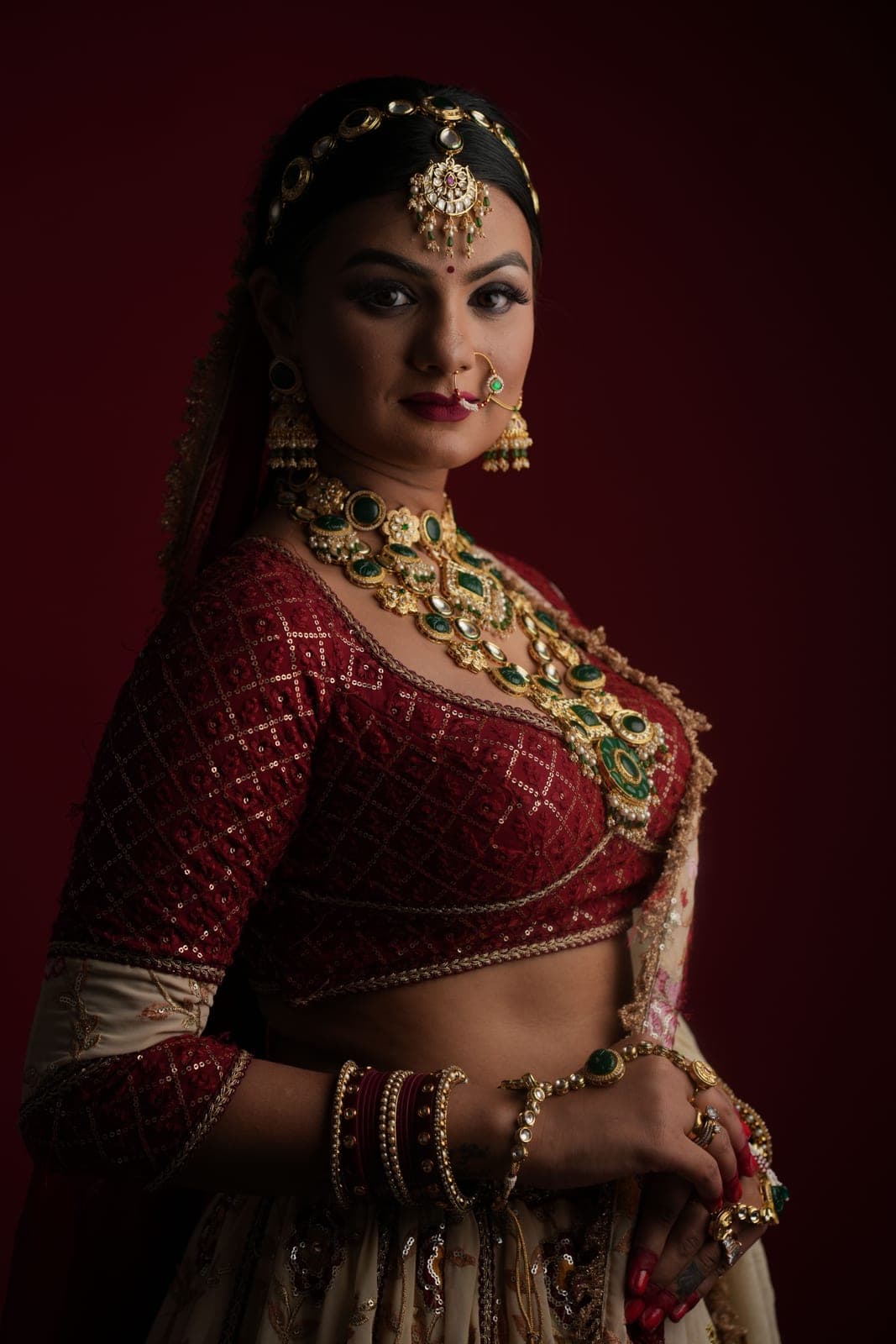
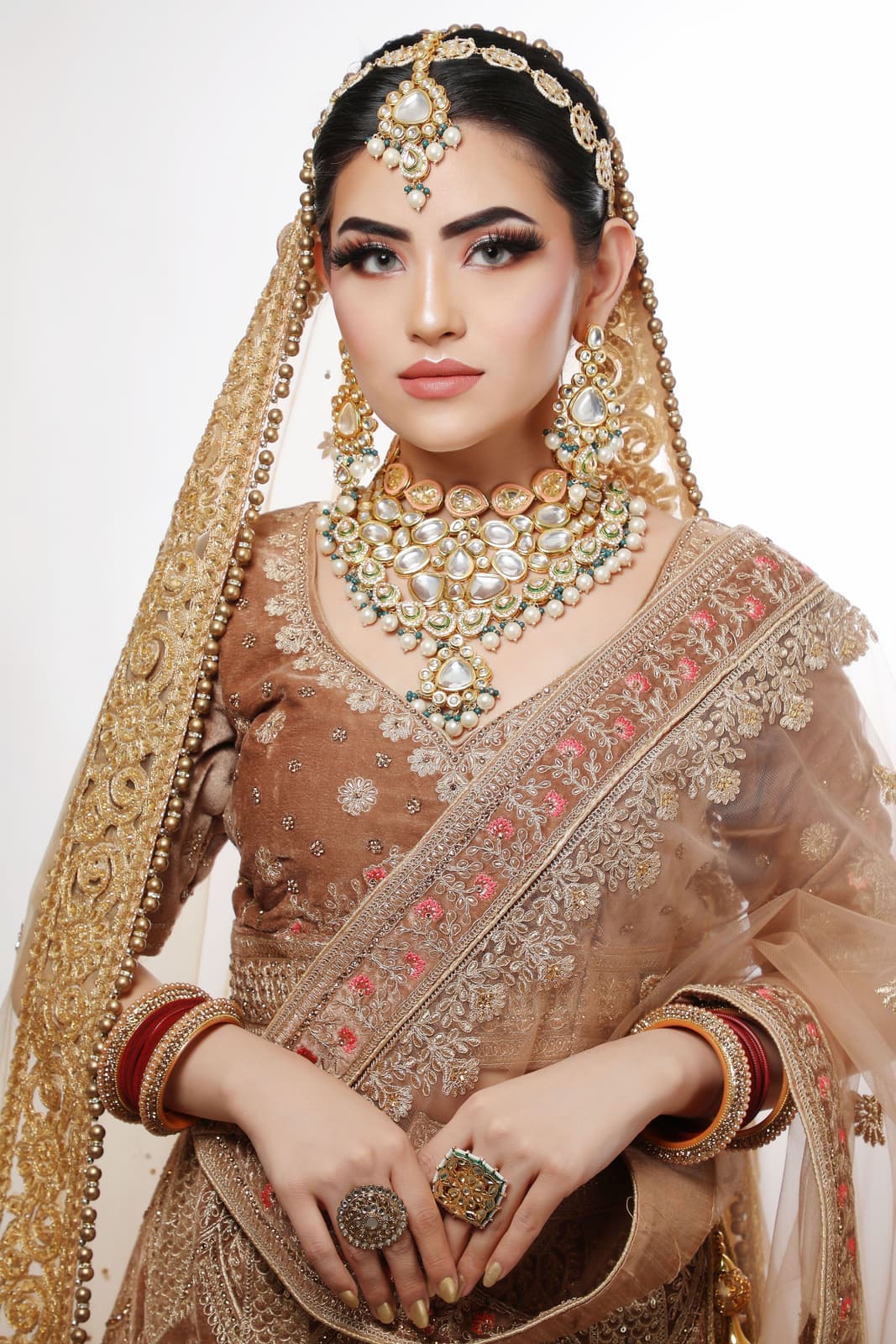
On the cover: a bride in a maroon lehenga with a kundan rani haar and matha patti. Photograph: Simon Niogi, Pexels.
In this issue
- Banarasi, after darkSix pictures, one saree, and the zari that makes it
- Five reds for DecemberFrom sindoor to madder, and a white shirt
- Ishita ChandelInside the Tara Bagh atelier in Shahpur Jat
- Kundan, re-setWhat to look for in the necklace of the season
- The guest, done wellHair and make-up for a December wedding evening
- Next monthThe groom’s issue, and where to find the clothes
On the cover
A bride in a maroon lehenga, a kundan rani haar and a matha patti, photographed against a red wall by Simon Niogi. What to look for in kundan is in Kundan, re-set.
The team
- Editor
- Rhea Bhandari
- Fashion
- Kabir Malhotra
- Beauty
- Pallavi Nair
- Jewellery
- Zoya Qureshi
From the editor
The season of
the second outfit
Between the middle of November and the end of February, a great many Indian families will go to more weddings than they can count. Most of us will need not one outfit but four: the haldi, the mehendi, the sangeet and the evening itself, with a reception on a cold night to follow.
This issue is about the second outfit, the one you wear to someone else’s wedding. It should be beautiful and it must not compete with the bride. It should also be worn again. That is why we open with a Banarasi saree, the one garment most of our mothers owned, and why our colour page ends with a white shirt.
We visited a zardozi workshop in Shahpur Jat, where a lehenga takes ten weeks and twenty-two pairs of hands. We asked what to look for in kundan, so that the necklace you buy in December still looks right in ten years. And our beauty desk wrote the guide we wanted for ourselves: how to look finished at nine at night, in a garden, in a shawl.
Next month is the groom’s issue. Write and tell us what you wore, and who made it.
Rhea Bhandari
Editor, New Delhi
Fashion
Banarasi,
after dark
One silk saree, six ways into a December wedding. Woven in Varanasi, worn everywhere, and still the thing a family hands down.
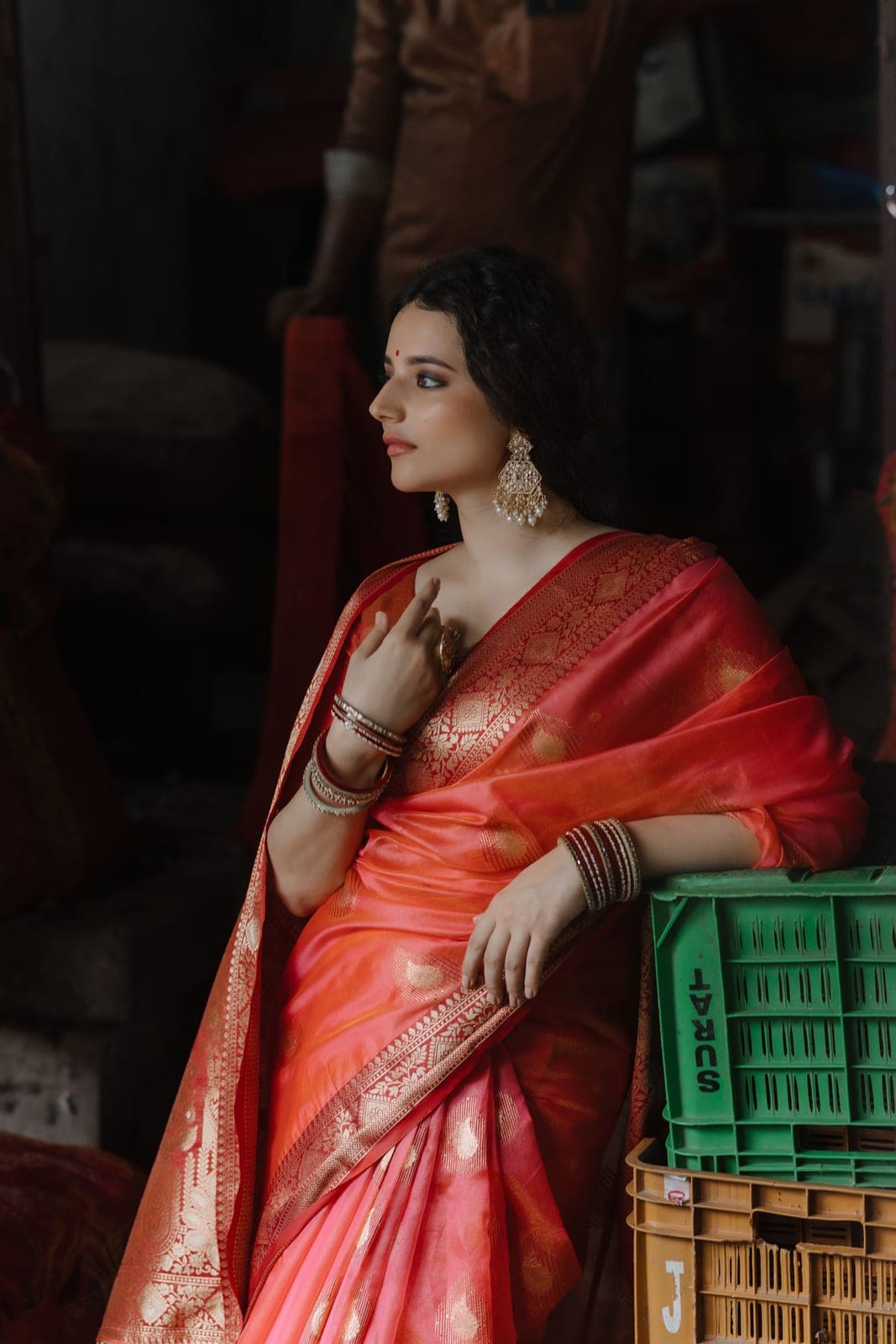
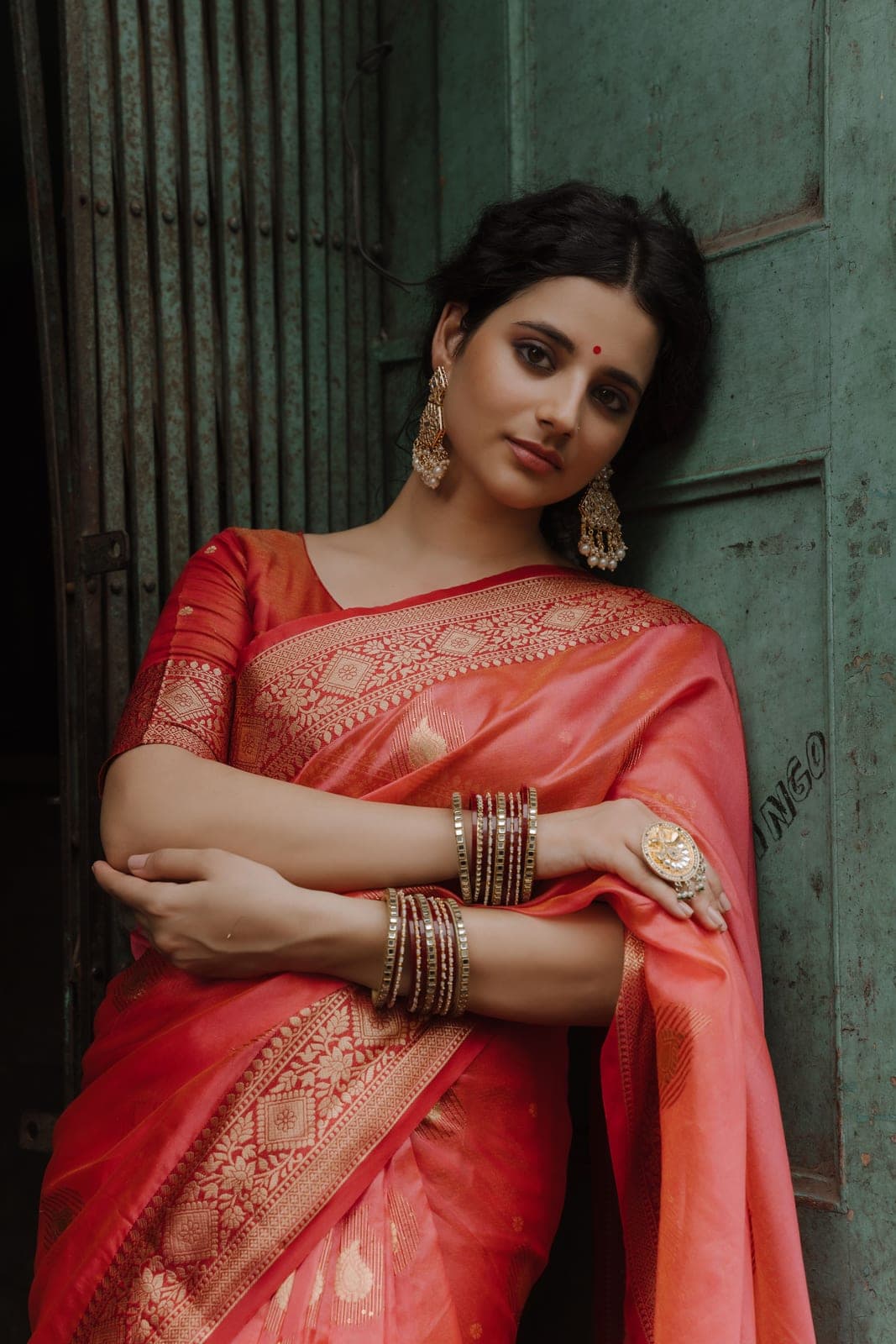
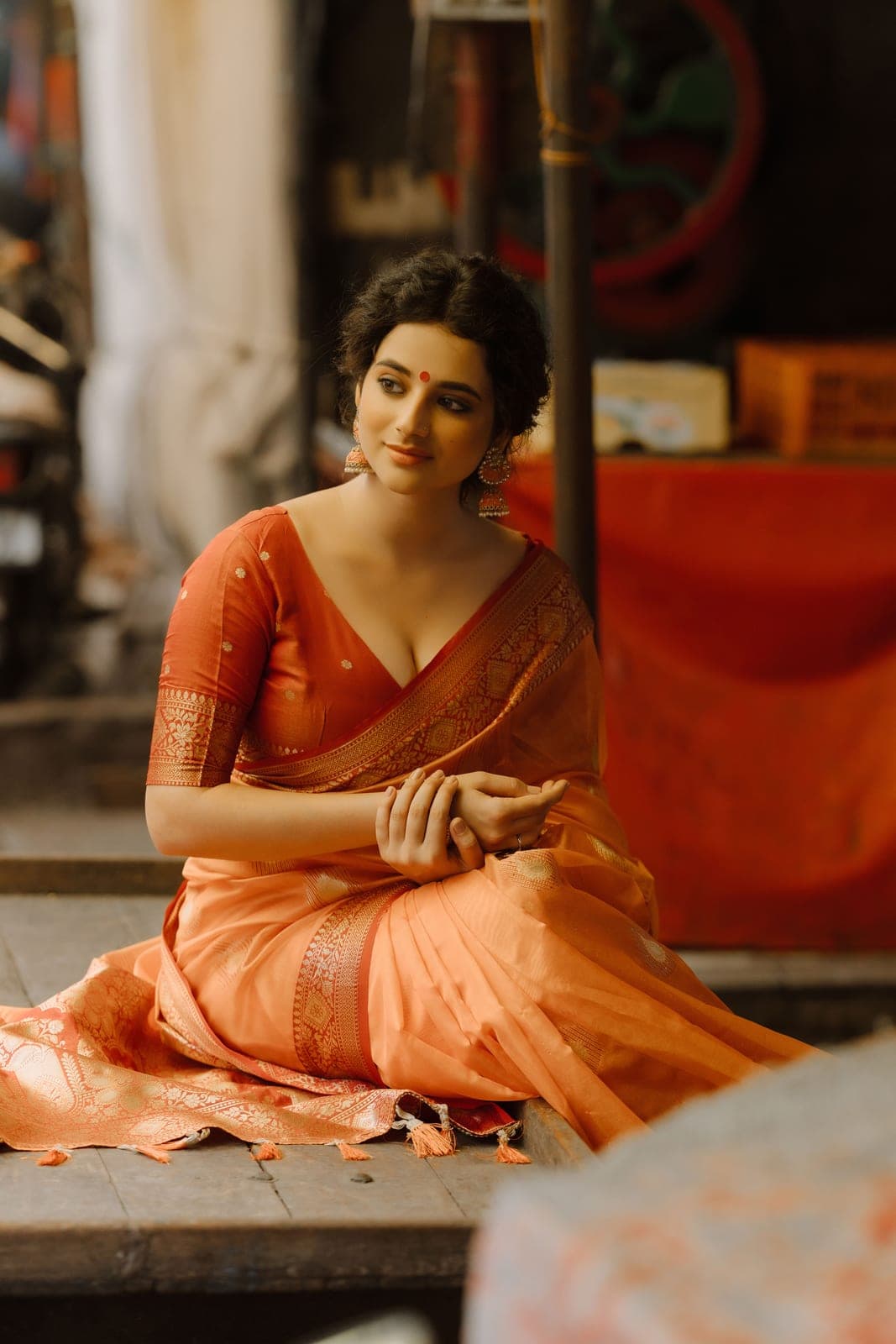
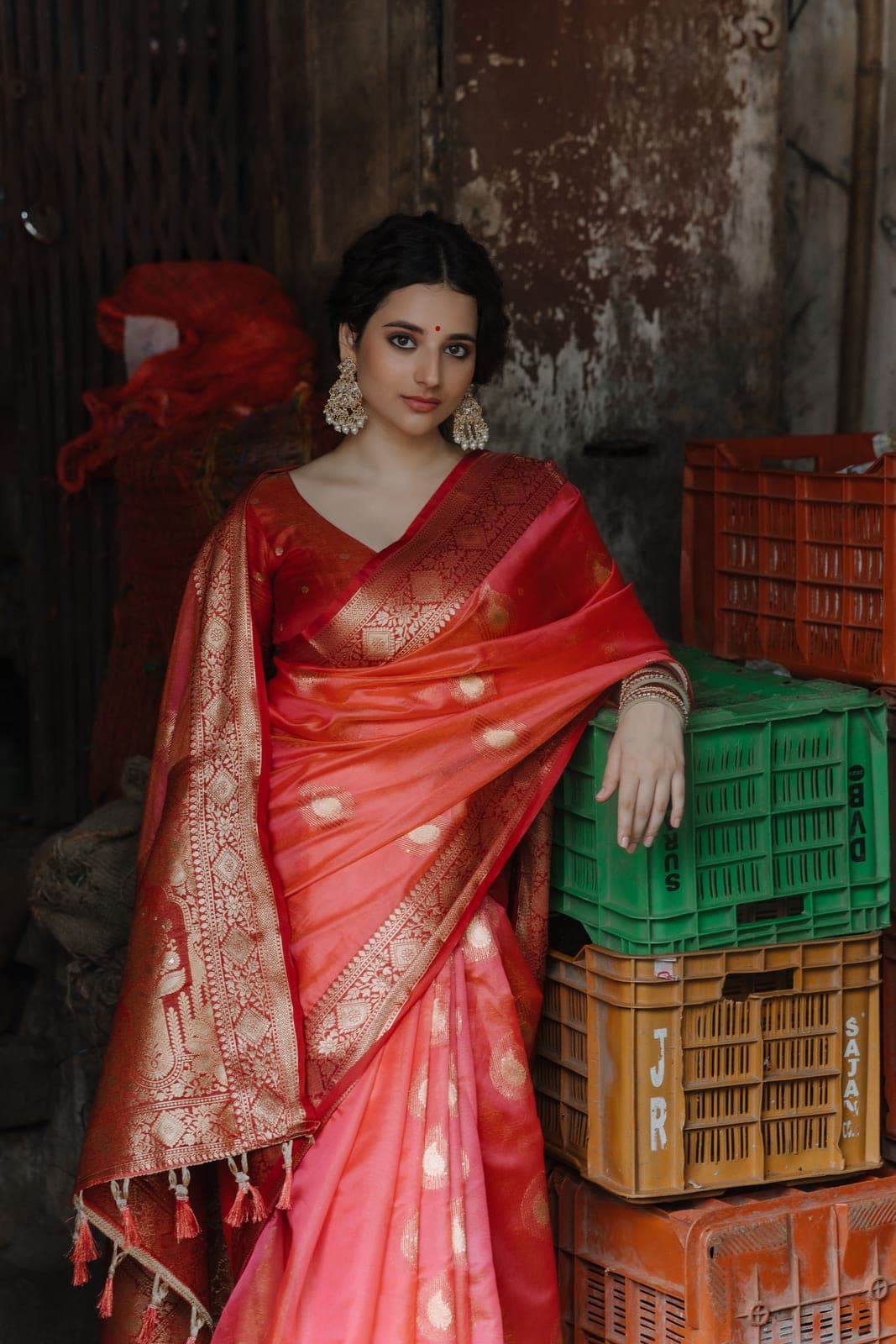
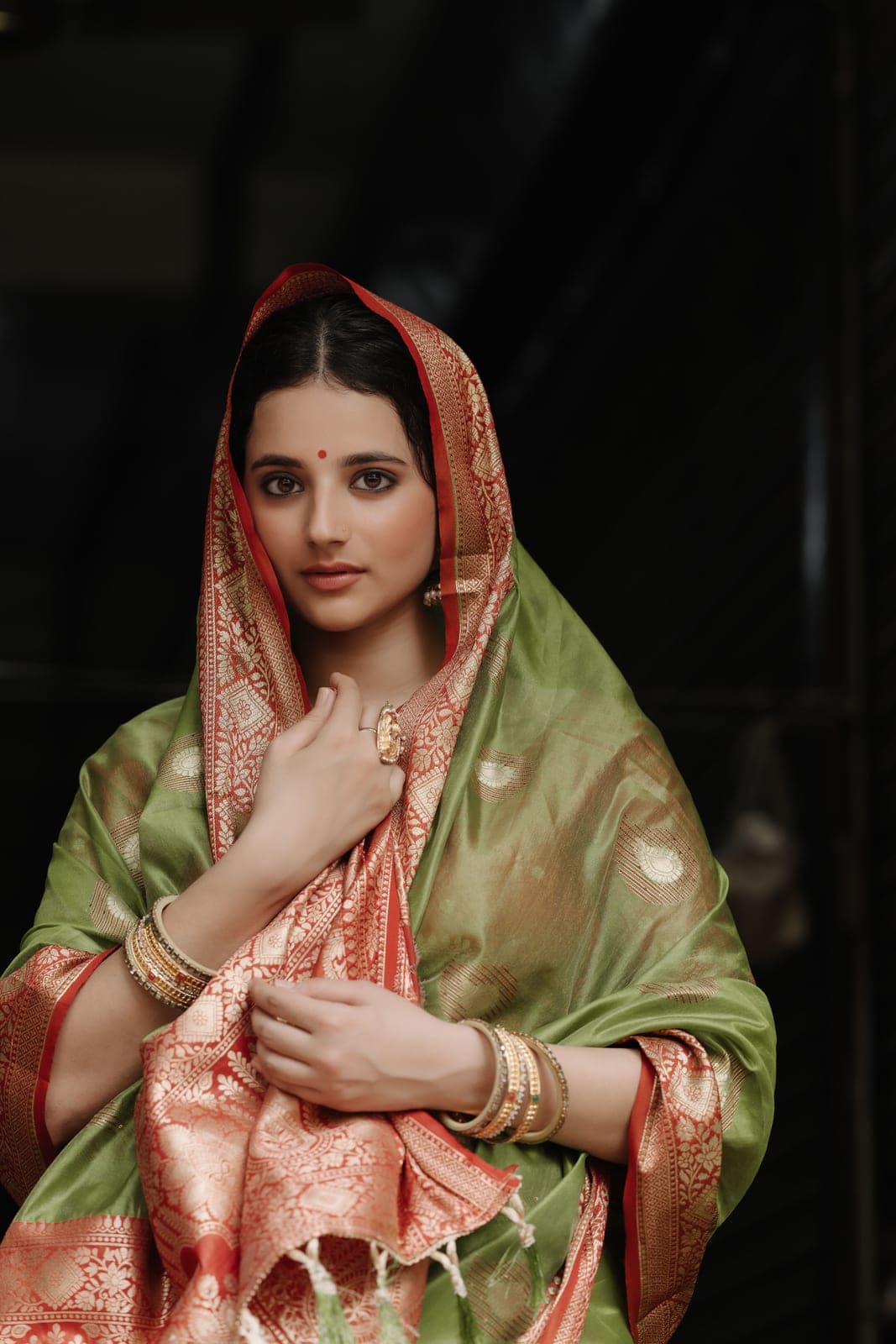
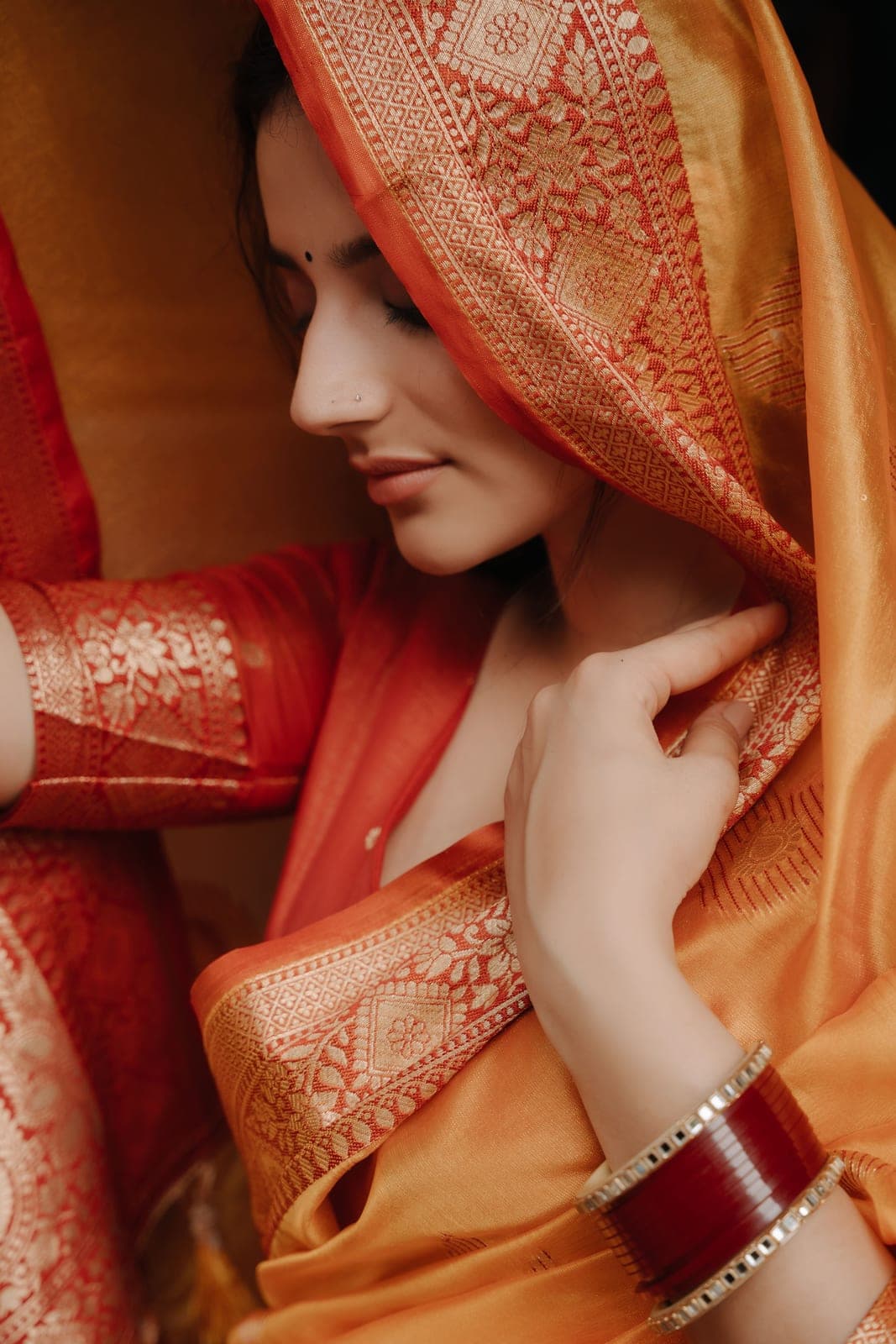
A coral Banarasi with gold buti, a matching blouse and glass bangles. Photographs in this story: Manish Jangid, Pexels.
Banarasi, after dark
The zari is
the point
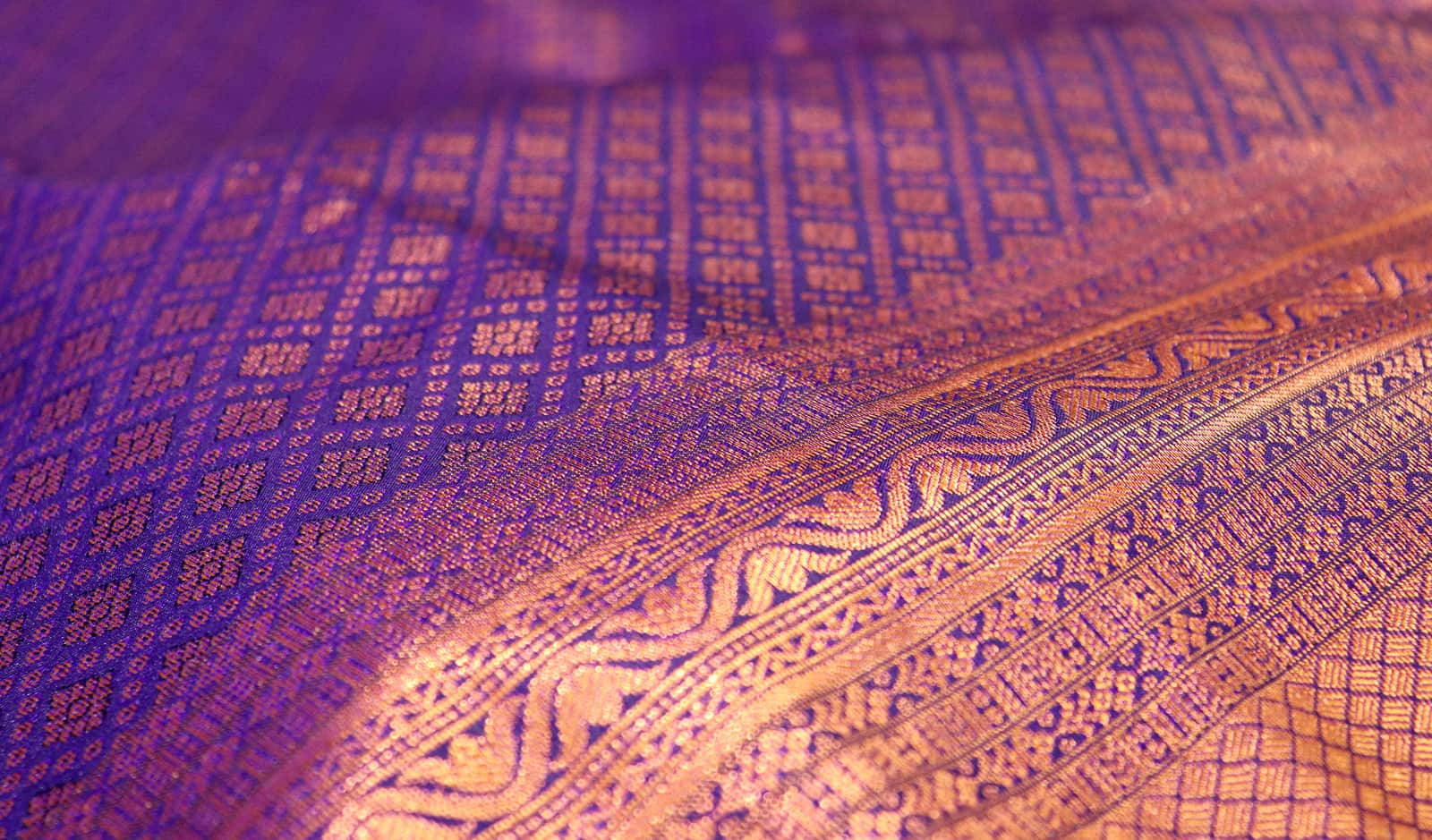
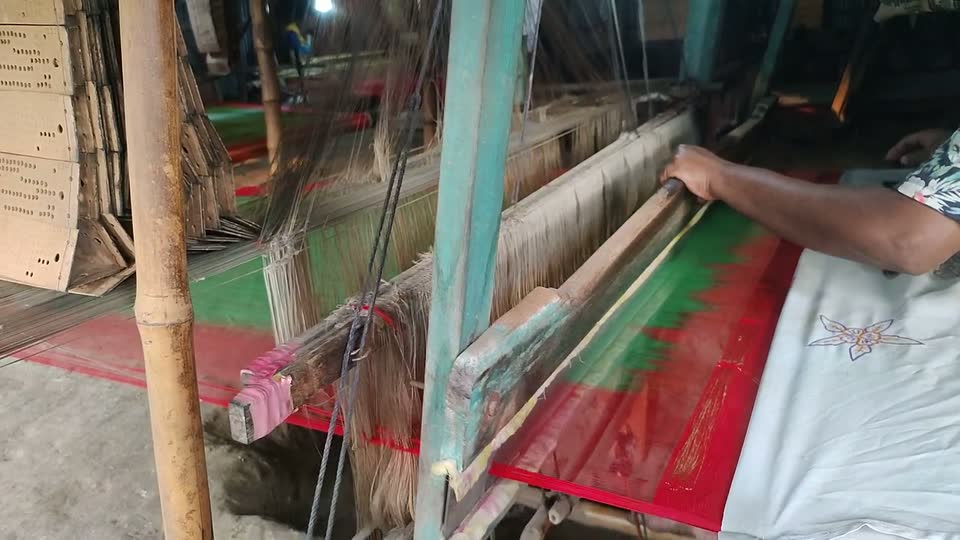
A Banarasi saree is woven, not printed or embroidered. The pattern is made on the loom, thread by thread, in silk and in zari, the metallic thread that catches the light at night. That is why it photographs so well under a single bulb, and why it is still the saree most families keep for weddings.
There are two ways to make the pattern. In kadhua weaving, each motif is woven in by hand with its own small shuttle, so the back of the cloth is clean. In fekua, or cut-work, the extra thread runs from edge to edge and the loose floats are cut away afterwards. Kadhua takes longer and costs more; turn the saree over and you will see the difference at once.
What to look for
The small motifs scattered over the body are butis; larger ones are butas, and an all-over net of pattern is a jaal. The heavy end that falls over the shoulder is the pallu, and the corner motif where the border meets it is the konia. A good weaver finishes the konia as carefully as the pallu.
Banaras brocades and sarees carry a Geographical Indication tag, which protects the name for cloth woven in the region. Ask where it was woven, and ask to see the back.
Wearing it now
Our pictures keep the saree and change everything around it: a plain blouse in the same colour, glass bangles stacked high, one statement ring, oxidised or gold earrings and no necklace at all. The zari does the work.
Six frames, one saree
Frame 1 of 6
The colours of December
Five reds,
and a white shirt
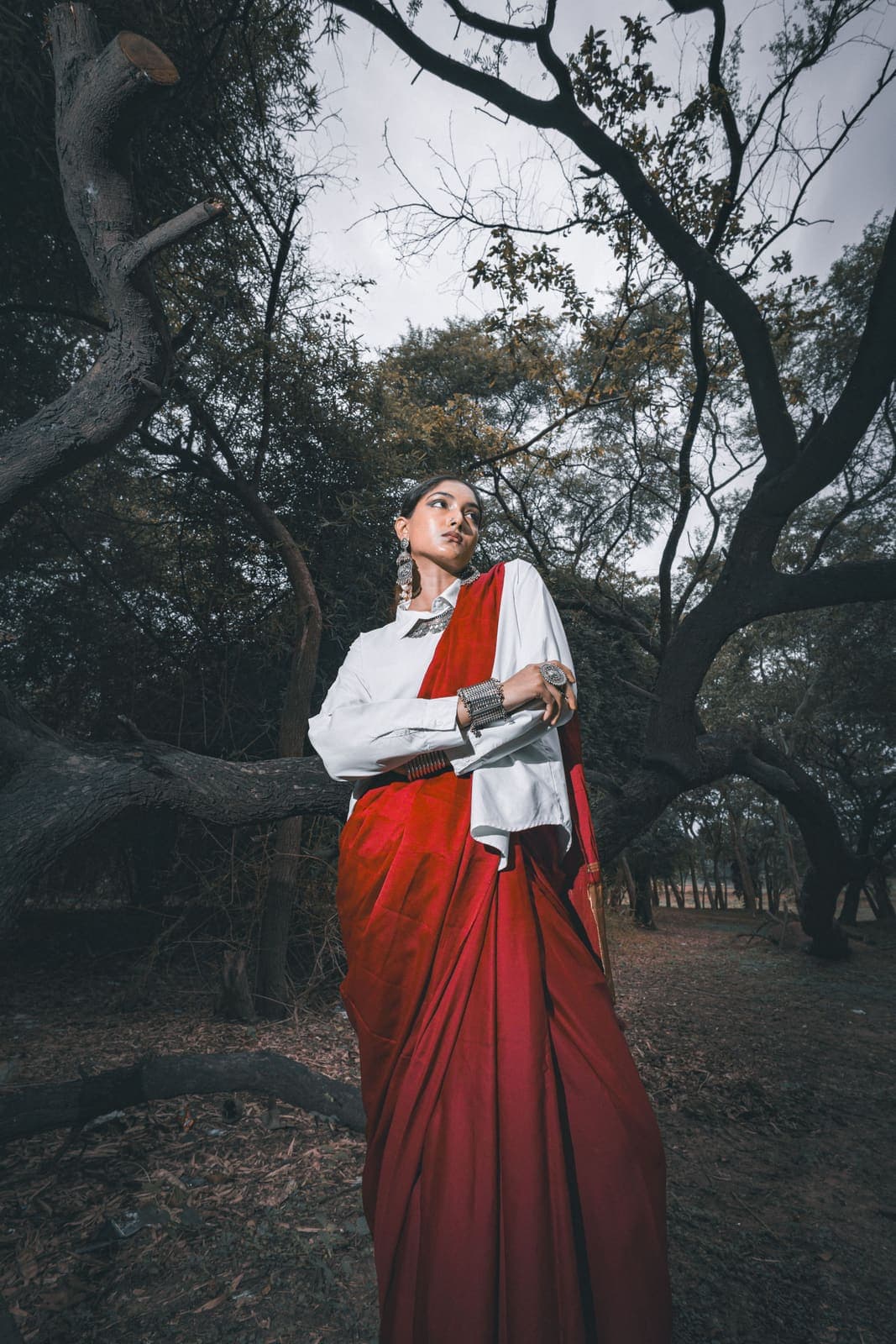
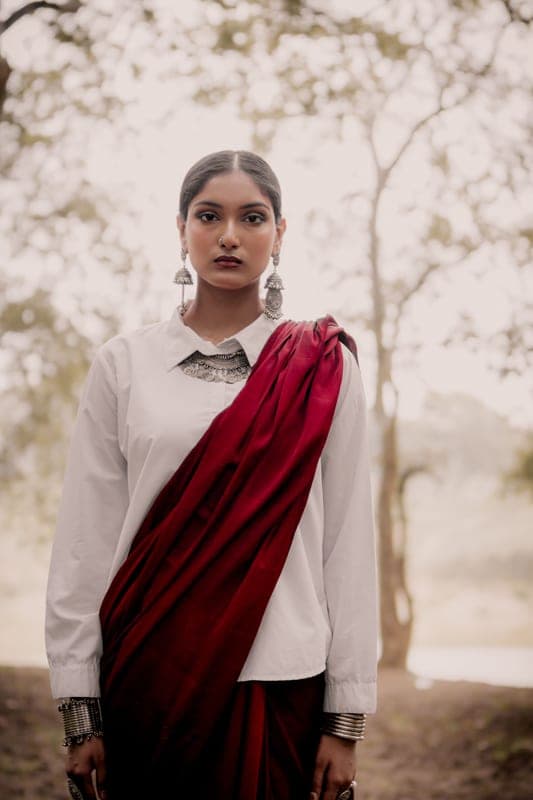
Red is still the wedding colour. The question this year is which red, and what you wear with it.
1 Sindoor
The orange-red of vermilion. It sits best on a Banarasi with heavy gold zari, and on skin in daylight, so wear it to the morning pheras.
2 Maroon
The classic bridal colour. In velvet it takes zardozi beautifully, which is why so many lehengas this season come in it.
3 Coral
Red with the edge taken off. Our Banarasi story is shot in it: easier to wear twice, and kind under evening light.
4 Rani
The pink-red of bandhani, the tie-and-dye of Gujarat and Rajasthan. For the mehendi or the sangeet, not the wedding night.
5 Madder
The brick red of ajrakh block prints, dyed with madder root. A cotton or modal ajrakh dupatta warms up an ivory outfit.
And the shirt
A crisp white shirt in place of a blouse, collar up, sleeves rolled once, the pallu over one shoulder. It works with any of the five, with silver earrings and flat shoes, for the daytime functions.
The atelier
IshitaChandel
Her label, Tara Bagh, makes forty lehengas a year by hand in a third-floor workshop in Shahpur Jat. We spent a morning there.
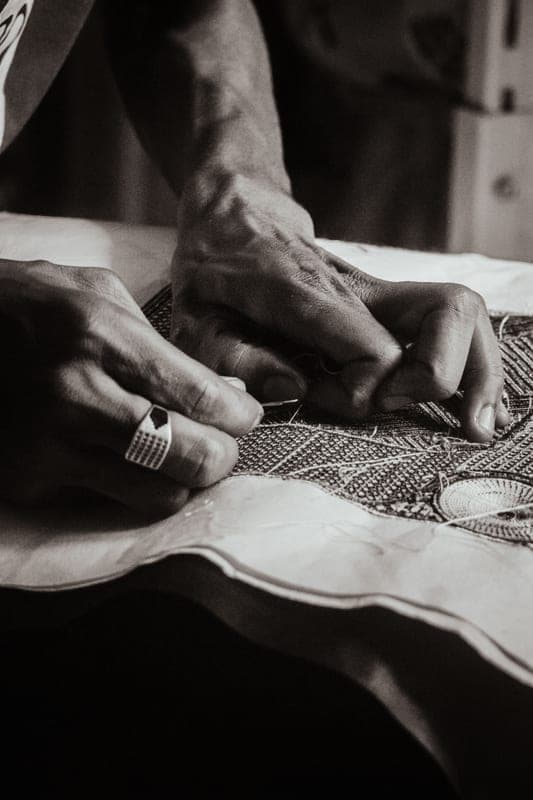
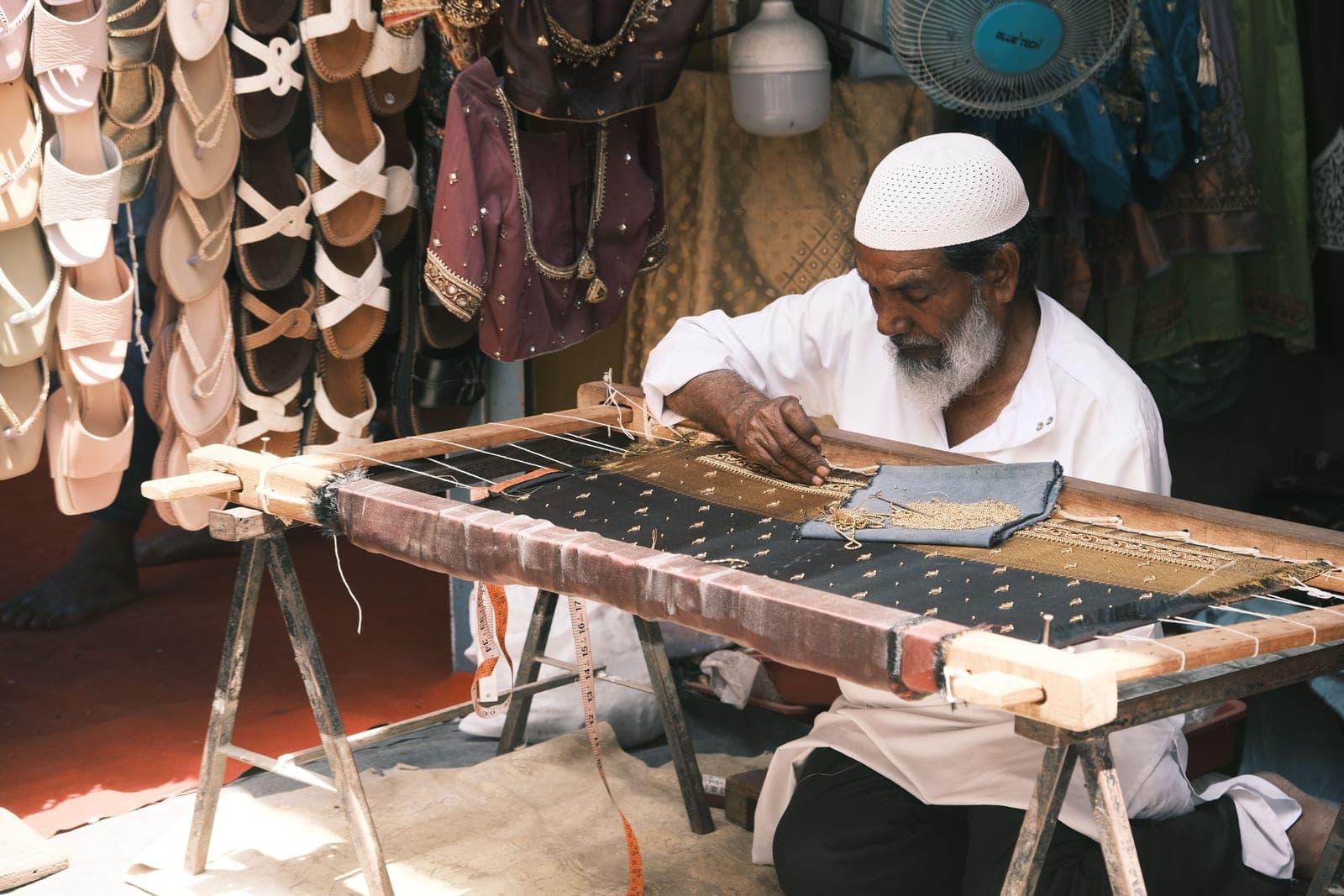
The workshop is up three flights of stairs in Shahpur Jat, the old village in south Delhi that now holds more boutiques than houses. Ishita Chandel started Tara Bagh in 2016 with two karigars and a borrowed room. There are twenty-two now, most of them from families that have done zardozi for generations, and they now fill the whole floor.
Zardozi is embroidery in metal thread. The karigars sit at a wooden frame, the adda, with the cloth stretched tight, and work with a hooked needle called an aari, laying down coiled wire, sequins, beads and dabka, the fine springy coil that gives the work its shine. A heavy bridal lehenga at Tara Bagh takes ten to fourteen weeks.
Made to order
Nothing is cut until a client has sat with Chandel twice. The first meeting is about the wedding: the venue, the time of day, how far the bride will walk. The second is about colour, with swatches dyed in the workshop. Only then is the pattern traced on paper, pricked with holes along its lines and pounced onto the cloth with chalk, so the karigars have a map to follow.
Fewer, heavier
Chandel would rather make fewer pieces with more work in them than follow a season. Her maroon velvet, embroidered edge to edge in antique gold, has been in the collection for six years. What changes is the weight: this December the lehengas are lighter, with more open ground between the motifs, because her clients want to dance in them.
What it costs
A Tara Bagh lehenga is priced by the hours of embroidery in it, which Chandel will show a client on the work sheet. She also takes back pieces she has made for re-work, so that a mother’s lehenga can be re-cut for a daughter, a service she says now keeps two karigars busy all year.
Jewellery
Kundan,
re-set
The necklace to buy this December is the one that will still look right at your daughter’s wedding. Here is how to tell.
Tap a word to read what it means.
Kundan
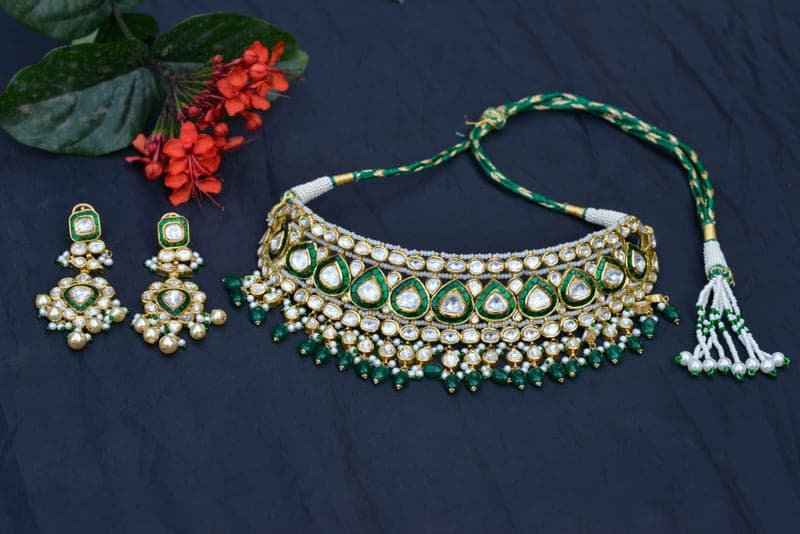
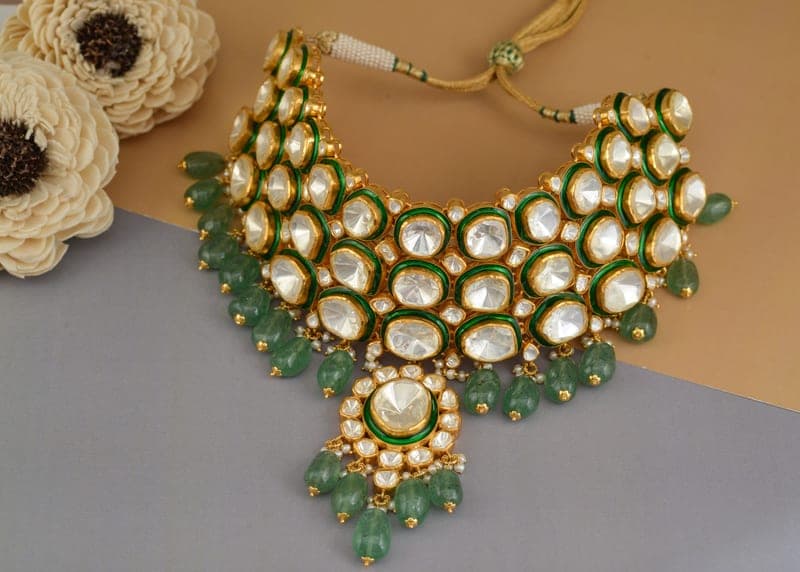
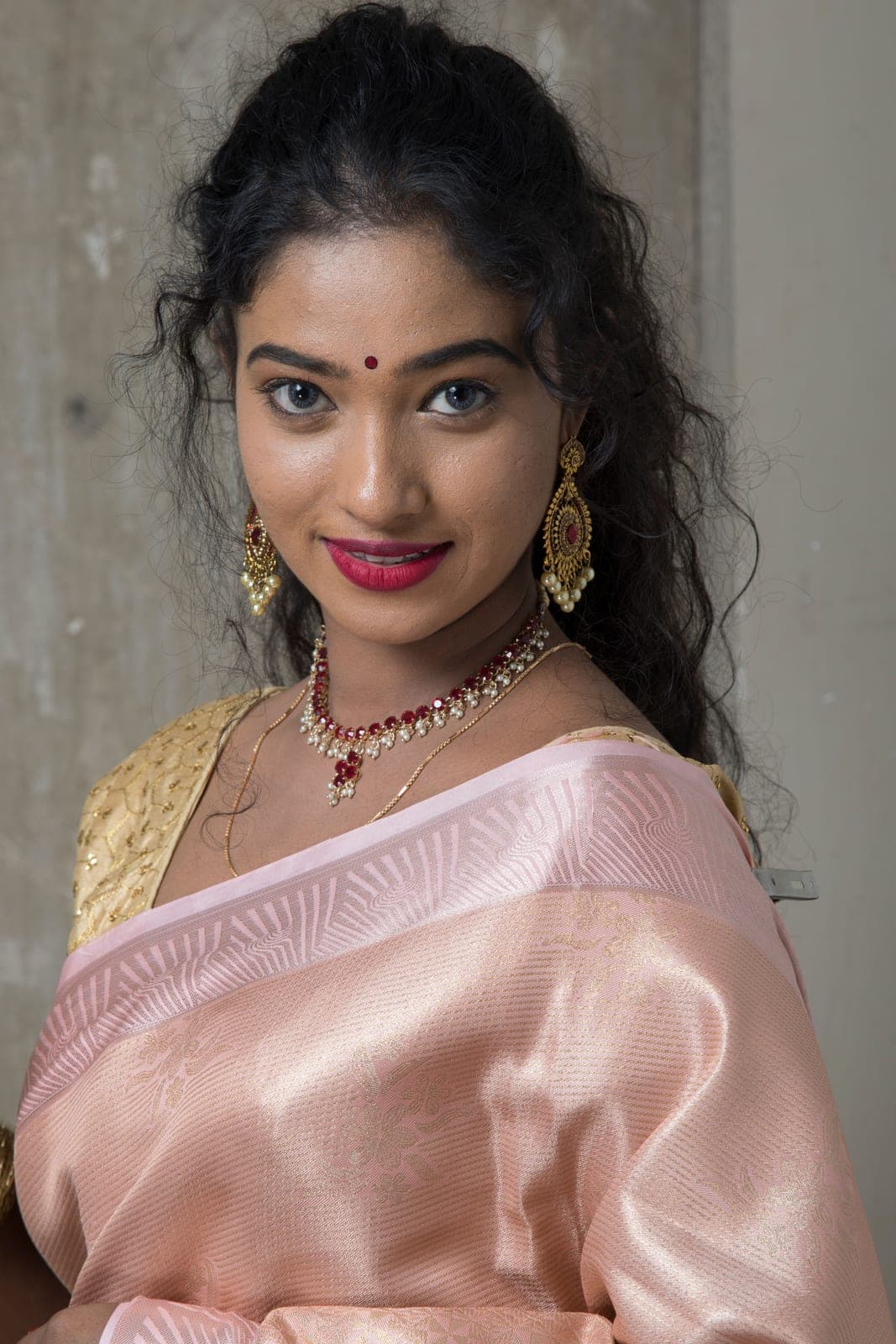
Kundan is the setting, not the stone. Glass or gem is held in place by layers of very pure gold foil pressed around it, a method that flourished at the Mughal court and is still worked in Jaipur and Bikaner.
Meenakari
Meenakari is the enamel, often on the back of the same piece. Turn a necklace over: fine meena on the reverse is a sign of care.
Polki
Polki means uncut diamonds, set the kundan way. Ask whether the stones are polki, other gems or glass, and have it written on the bill.
Re-set
Re-set rather than buy new. A family necklace can be re-strung on silk, given a new clasp or broken into a choker and earrings.
Beauty
The guest,
done well
Finished, not bridal. A guide for a December wedding evening, which starts at eight and ends long after the shawl comes off.
Skin first
Cold evenings dry the skin. Moisturise an hour before, then use a light primer so the base does not settle into dry patches.
A thinner base
Match foundation on the jaw in daylight, not under shop lights, and set only the centre of the face. A little glow is right for a night function.
One feature
Choose the eyes or the lips. With a red or rani outfit, keep the eyes to kajal and mascara and let the lip carry the colour.
Hair that lasts
A low bun survives a dupatta, a shawl and three hours of dancing. Pin it before you dress, then add flowers or a pin last.
Earrings, not more
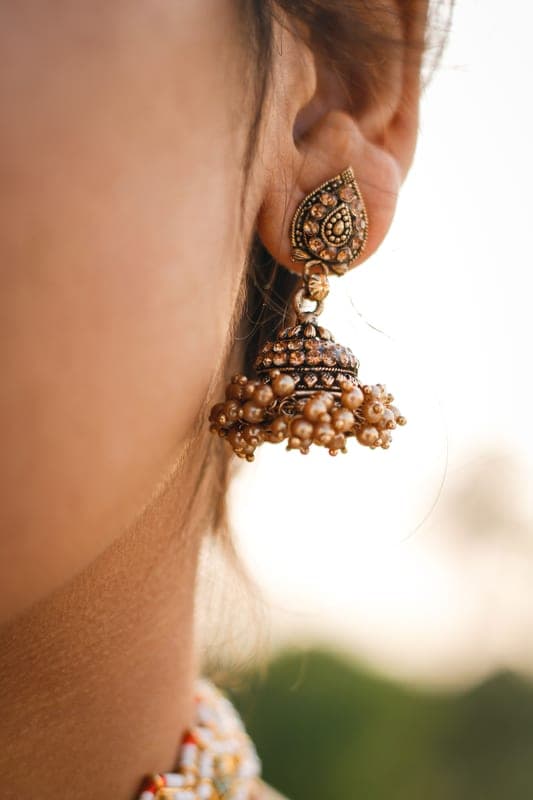
Heavy jhumkas need a clear neck. With big earrings, wear a fine necklace or none, and leave the layers to the bride.
Stockists
Where to buy
The labels below are invented for this sample issue, like Tara Bagh in our atelier story. In a real issue this page lists every shop from our pages.
- Tara Bagh
- Shahpur Jat, New Delhi
- Kashi Kothi
- Chowk, Varanasi
- Neel Kamal Jewellers
- Johari Bazaar, Jaipur
- Rang Rasiya
- Law Garden, Ahmedabad
- Sitara Studio
- Bandra West, Mumbai
- Meher Atelier
- Jubilee Hills, Hyderabad
Photographs
- Cover
- Simon Niogi
- In this issue
- Sharath G.
- Banarasi, after dark
- Manish Jangid
- Five reds, and a white shirt
- Himanshu Singh
- The atelier
- Aditya Oberai, DRIFTCLICK
- Kundan, re-set
- AMA International Academy, Arif khan
- The guest, done well
- Milton Das, Dhrupal Shiyal
- Next month
- Mir Burhan
Licensed from Pexels. The loom film is by Kowsar Ahmed, also on Pexels.
Advertisers
None. This sample issue carries no advertising.
Noor is a sample issue designed by DigiMagz. The title, the editor and team, the Tara Bagh label and its people, and the stockists are fictional. Every photograph is real, by the photographers named here, licensed from Pexels.
Next month
January:
the groom
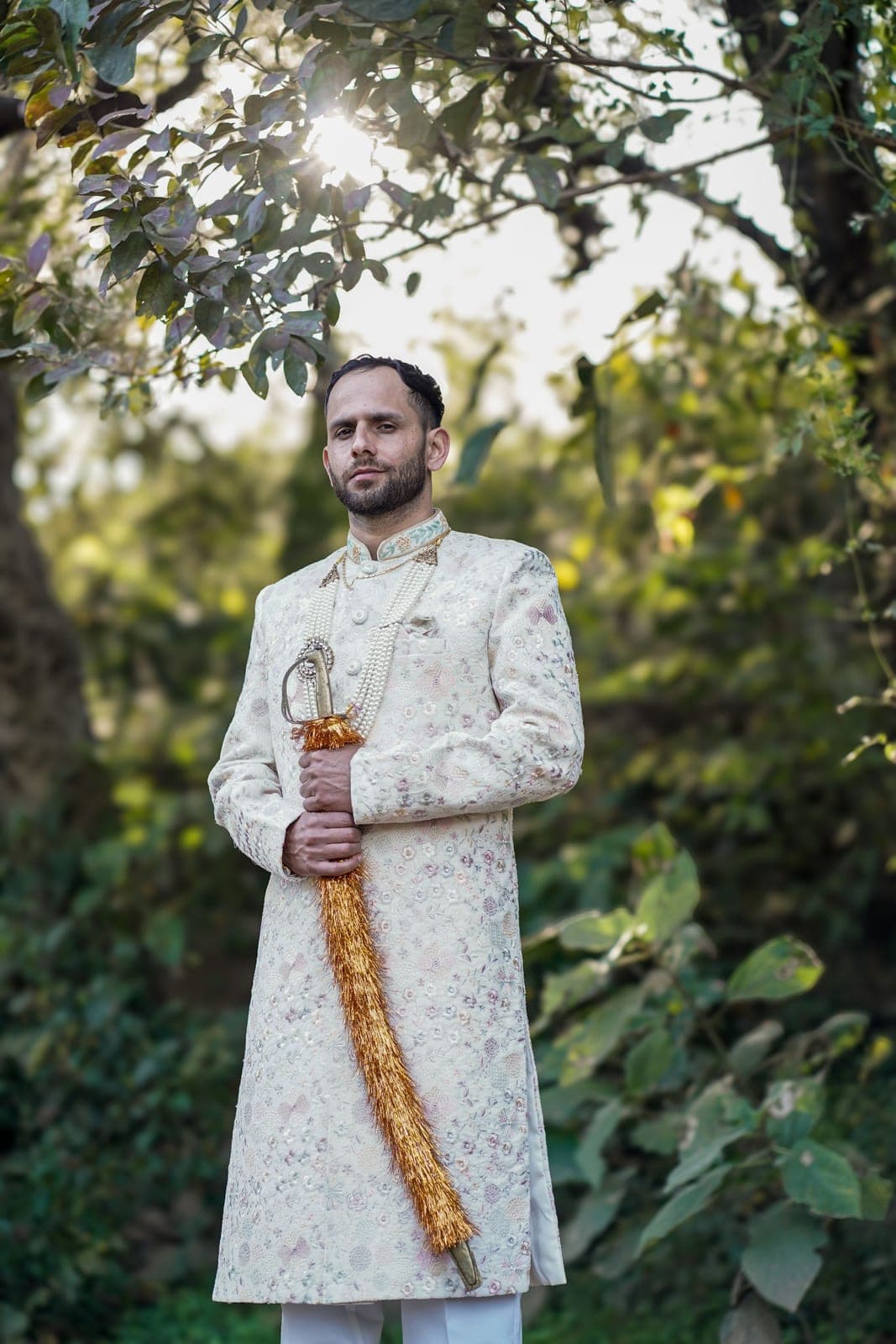
Sherwanis, bandhgalas and the safa, and the men who still tie their own. On sale in the first week of January.
Next month: an ivory sherwani with a dupatta of the same cloth and a sword with a marigold tassel. Photograph: Mir Burhan, Pexels.
DigiMagz, magazine studio, Pune
This is a sample issue designed and produced by DigiMagz, a magazine design studio in Pune, India.
Magazines, annual reports, brochures, catalogues and keepsakes for organisations in India and abroad.
Want your magazine like this?- +91 98605 96905
- magz@digi.ai.in
- Print issue
- Turn the pages of the print edition
Noor, Issue 01. Sample issue, not for sale. Photographs licensed from Pexels and credited inside. Titles, people and organisations named in this issue are fictional. DigiMagz is a studio of Baidehi Ravanari Atelier, Pune.