Noor
Issue 01, The wedding issue
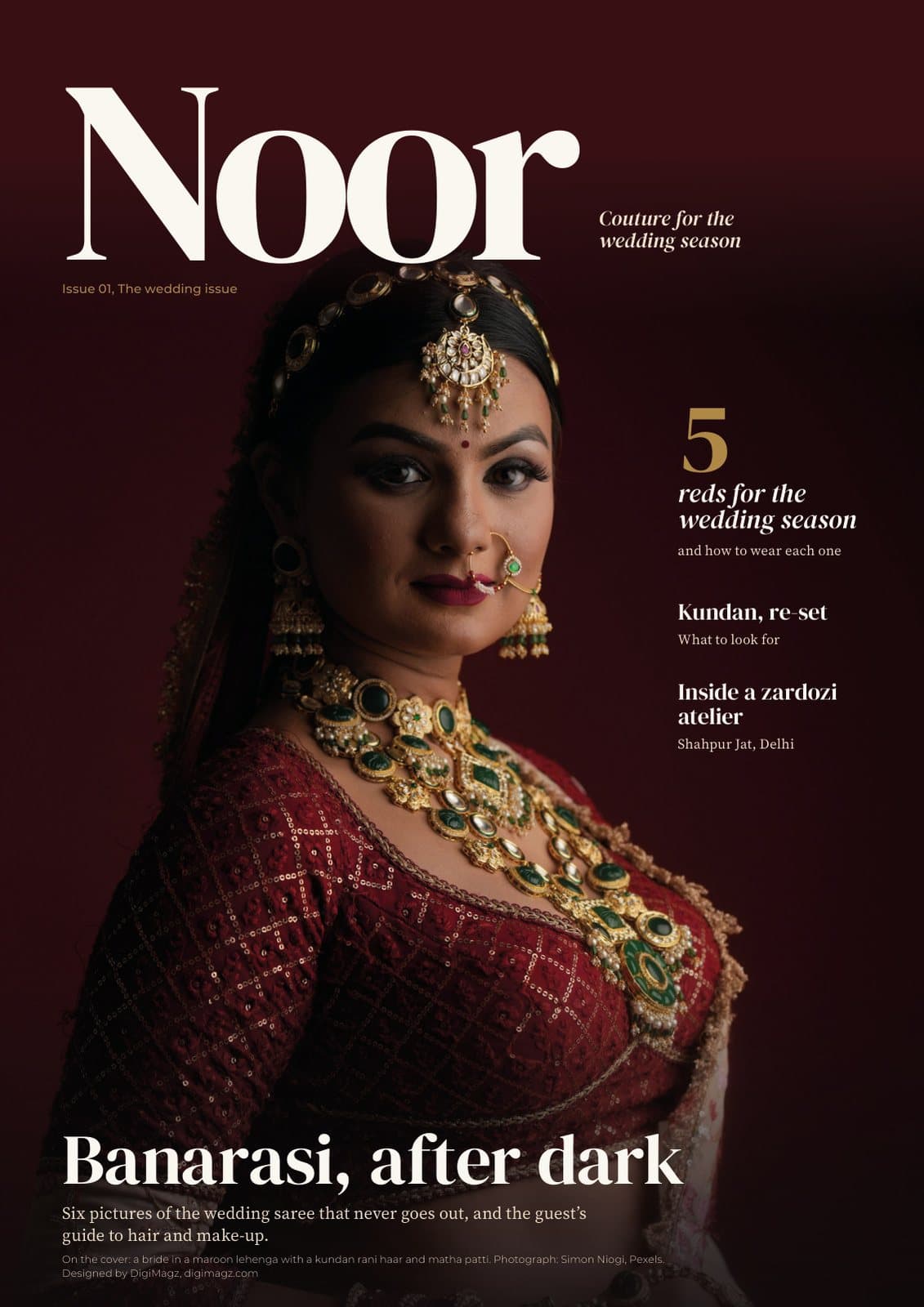
Noor is a sample issue from our studio: a fashion monthly for the wedding season, made the way the big glossies are made, with Indian models, Indian fabrics and Indian names.
It follows the habits we learned from studying professional fashion titles page by page: one shoot carried across a story, a display face per story, small serif text, sentence captions with credits, and planned white space only where a picture needs it.
- Format
- Fashion magazine
- Extent
- 12 pages
The whole issue · 12 pages
Turn the pages.
Drag a page corner, tap either side, or use the arrow keys. Switch on the designer’s notes to see why each page is built the way it is.
The same issue as a phone-first web magazine: text that reflows, a shoot to swipe, colours to tap.
Page by page
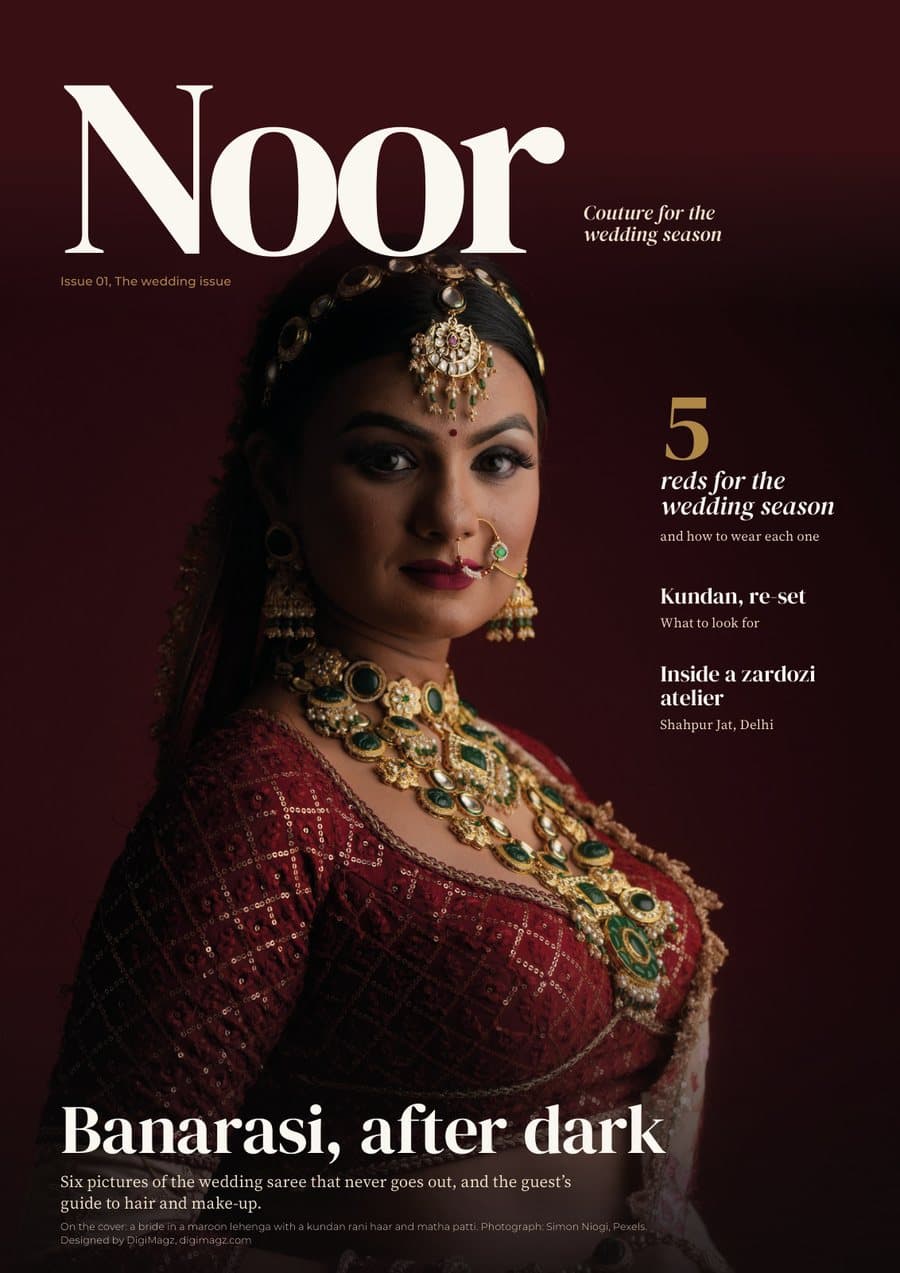
- 1. Cover
- 2. Contents and the editor's letter
- 3. Banarasi, after dark
- 4. The zari is the point
- 5. The drape
- 6. Five reds, and a white shirt
- 7. The atelier: Ishita Chandel
- 8. Kundan, re-set
- 9. The guest, done well
- 10. Next issue: the groom's issue
- 11. A DigiMagz studio page
- 12. Back cover: a DigiMagz advertisement
Decisions
One shoot, one story
The Banarasi story uses six frames from a single photographer's shoot, so the model, the light and the place stay the same from the opener to the last frame.
Colour taken from the cover
Maroon, ivory and old gold come from the bride's lehenga on the cover; the jewellery page turns deep green for one change of pace.
Words that are useful
The trend page names five reds and what to wear them to; the jewellery page explains kundan, meenakari and polki in a sentence each.
A studio page at the back
The issue closes on our studio page: who made it, and how to reach us on WhatsApp or by email.
More work
- Nature
- Frontiers
- Agriculture
- It's My Day
- Pune Fashion Trends
- Tarangini Industries
- The Hour
- Homecoming
- Ninety Years
- Saat Phere
- Rasoi
- Sehat
- The Banyan
- aangan
- Kaveri Softworks
- Second Innings
- Taal
- Vivah
- Safar
- Sitara
- Sonchafa, Baner
- Sanjha Woodworks
- The Tanvi & Arjun Chronicle
- Panghat Foundation
- Prakaar
- Tej
- Field Heat
- Field Heat, the letter
- Jharokha, the letter
- Jharokha
- Prahar, Koregaon Park
- Nuajibana Trust