The Tanvi & Arjun Chronicle, Wedding edition, No. 1. Web edition.
How it started
Sunhat blows away in Lucknow park; man on bicycle gives chase
Five years, two cities and one rescued hat later, the cyclist and the architect marry this evening on a lawn in Assagao. Our reporter, who was not there at the time, has the full story.
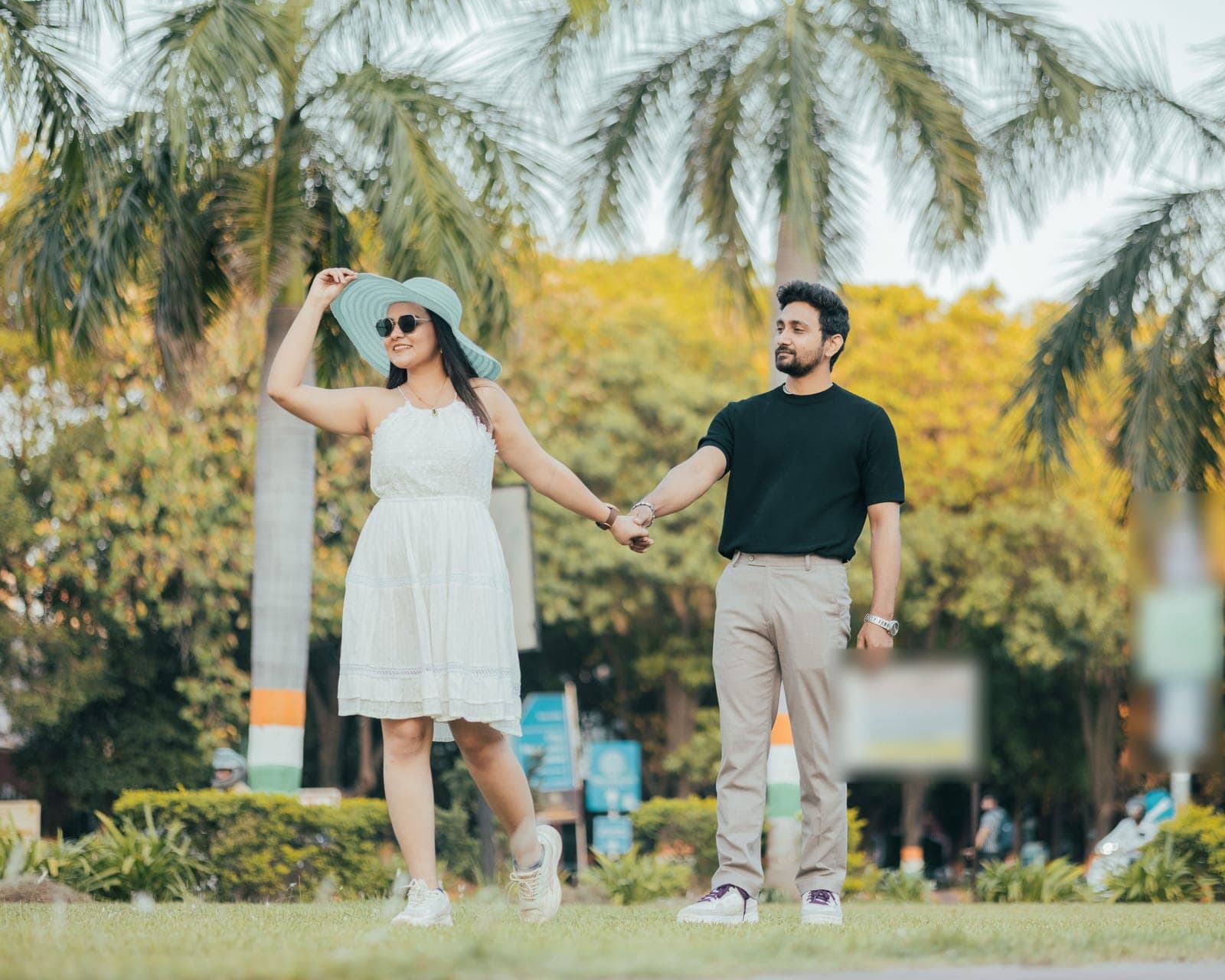
It was a Sunday in March, a little after seven in the morning, and the wind came across the lawns of a big city park in Lucknow without warning. Tanvi Naik, who had moved up from Goa a few weeks earlier to work on the restoration of an old school building, was standing at the edge of the cycle track with her bicycle and a wide straw hat that her grandmother had given her for the northern sun.
The hat left first. It rolled on its brim, the way hats do, across the grass, over a flower bed and on to the track, where the Sunday cycling club was coming round the bend in a loose line of about twenty riders.
Arjun Mehra was at the back. He says he was at the back because he was being kind to the beginners; the club secretary says he was at the back because he always is. Either way, he was the only one who saw the hat, and the only one who stopped.
Two laps, one hat
What followed has been described to this newspaper by several witnesses, and their accounts do not agree. Tanvi says Arjun rode after the hat for a full lap of the track. Arjun says it was half a lap. The club secretary, who was timing the riders, says it was two laps and that it cost him his best morning of the year.
All of them agree on the ending. Arjun came back with the hat held in his teeth, because both hands were on the handlebars, and gave it to her with a small bow. It was slightly damp. She thanked him and asked whether the club took new members.
The club gains a member
It did. The following Sunday Tanvi came back with her bicycle and without the hat, and rode at the back with Arjun, who taught music at a school on the other side of the city and played the tabla in the evenings. She told him about old buildings; he told her which tea stall near the park made the best bun-makhan.
By the end of the month they were the last two riders on the track every week, and by the end of the year the rest of the club had stopped waiting for them.
The first lunch
Their first meal together that was not a cup of tea came in the monsoon, after a ride cut short by rain. They sheltered under the awning of a small restaurant near the old city, ordered kebabs and talked until the waiters began to stack the chairs. Tanvi says she knew that afternoon. Arjun says he knew at the hat, but was too out of breath to say so.
The club, which had watched all of this from the front, opened a book on how long it would take. The secretary, still sore about his lap time, put a hundred rupees on two years. He lost that too.
Members of the club still slow down when they pass the place where the hat came to rest, and some raise a hand. Several of them have travelled to Goa for tonight, and they will be glad to show you the exact spot on a map of the park, at some length, if you ask them. We suggest you ask them after dinner.
Tanvi’s grandmother, told the whole story on the telephone that night, asked only one question: whether the young man had at least returned the hat clean. He had not. She has since forgiven him, and you will meet her in the front row tonight.
How it started, continued from page 1
Two cities, one long-distance call a night, and a proposal at dawn

The second year was harder. Tanvi’s restoration job in Lucknow ended, and a firm in Panaji offered her the work she had trained for: old Goan houses, their lime plaster, their oyster-shell windows and their tiled roofs. She took it. Arjun stayed with his school, his pupils and the tabla.
For fourteen months they lived nearly 2,000 kilometres apart. They spoke every night at ten, after his last tuition and her last site visit, and the calls went on so long that both their mothers learned to stop asking when they would end.
The northern visitor
Arjun’s first visit to Assagao is remembered by the Naik family mainly for the prawns. He had decided to show his respect by eating everything put in front of him, which in a Goan house is a mistake. By the third helping of balchão he had stopped talking, and by the fourth Tanvi’s grandmother had decided she liked him.
The Mehras, for their part, met Tanvi over a Lucknow lunch that began at one and ended at six. Arjun’s father asked her about the old school building she had worked on, which he had attended as a boy, and the two of them spent the afternoon arguing happily about whether its verandah had always been painted green.
One argument left
The only lasting disagreement between the families concerns the sangeet. The Naiks hold that a sangeet should end with a Konkani song sung by everyone over sixty. The Mehras hold that it should end with a Punjabi wedding number that nobody over sixty can keep up with. The couple have decided to have both, one after the other, and then to leave quietly by the side door.
The proposal
It happened, as it had to, on a bicycle. On a visit to Goa last winter Arjun suggested an early ride to the old fort above the river at Chapora. Tanvi, who is not a morning person, agreed on the condition that there would be breakfast.
There was breakfast. There was also, at the top of the hill, a straw sunhat waiting on a rock, with a ring tied to its ribbon. Arjun had bought the hat in Mapusa market the day before and had asked a friend to carry it up in the dark. The friend has asked us to mention that he climbed the hill twice, because the first time he left the ring in the car.
Tanvi said yes before Arjun had finished his sentence, which is why nobody, including Arjun, knows exactly what he was going to say. He has promised to say it properly this evening.
Coming home
This year Arjun moved to Goa. He teaches music at a school in Mapusa and has joined a cycling club that rides out to the beaches on Sunday mornings. He is, we are told, still at the back.
Tanvi kept the original hat. It hangs on a nail in the hall of the Naik house, and tonight it will sit on the cake table, under guard.
Tonight, on the lawn of the old house in Assagao where Tanvi’s grandparents were married, the two of them will walk round the fire seven times. You are invited to watch, to cheer, and to keep a close eye on your hat.
The day
Henna on Friday, vows at sunset, and why everyone will be throwing rice
A first-timer’s guide to the ceremony
If this is your first Hindu wedding, welcome. Nobody will expect you to know what is going on, and most of the younger cousins do not either. Here, in the order you will see them, is what happens.
The baraat
The groom’s side arrives together, on foot, behind a drummer. Traditionally the groom rides a horse; Arjun has asked for a bicycle, and been told no. The bride’s family meets the procession at the gate, and there is a short, cheerful negotiation before anyone is let in.
The varmala
Bride and groom put garlands of flowers round each other’s necks. Friends on each side will try to lift their own one higher so the other cannot reach. This is the loudest part of the evening, and the most photographed.
Kanyadaan
Tanvi’s parents place her hand in Arjun’s. It is a quiet moment, and the one at which the older guests reach for their handkerchiefs.
The seven steps
The couple walk round a small sacred fire seven times, the pheras, and take the seven steps of the saptapadi, while the priest recites the vows in Sanskrit. With each round they make a promise: food, strength, prosperity, happiness, children, the seasons and friendship. Our priest, Pandit Joshi, will explain each one in English as he goes, and he has promised to keep it under an hour.
Sindoor and mangalsutra
Arjun will put a line of red powder in the parting of Tanvi’s hair and tie a necklace of black beads round her neck. They are now married. You may cheer.
The rice
As the couple walk back down the aisle, guests throw rice and flower petals for luck. A small bag will be on your chair. Please throw it at the couple and not, as happened at the cousins’ wedding, directly into the priest’s face.
And the shoe
During the ceremony the groom has to take his shoes off. The bride’s sisters and cousins will steal them and hold them for ransom. The Mehras have been warned; see the classifieds on page 7.
Food and drink
Two kitchens, one table
The menu tonight has two home towns. Mrs Fernandes of Assagao and Mr Rizvi of Lucknow have been negotiating it since June.
When the couple sat down to plan the dinner, they found they agreed on almost nothing. Tanvi wanted fish, cooked the way her grandmother cooked it, sour with kokum and hot with red chillies from the Mapusa market. Arjun wanted the slow food of Lucknow: kebabs that fall apart, rice cooked under a sealed lid, bread soft enough to fold.
The answer was two cooks. Mrs Lavina Fernandes has fed Assagao weddings for thirty years from a kitchen behind her house, and she does not measure anything. Mr Imran Rizvi, whose family has cooked for Lucknow weddings for three generations, travelled down with his own spices in a steel trunk, and he measures everything.
The negotiation
They first met in June, on a video call that lasted two hours. Mrs Fernandes did not believe that anyone could eat a kebab without chewing it. Mr Rizvi did not believe that a curry could be sour on purpose. By the end of the call each had agreed to try the other’s food, and by the tasting in October each had asked for the other’s recipe. Neither got it.
The result is the menu on this page, which runs from the Goan side on the left to the Lucknow side on the right, and meets in the middle at dessert.
A few notes
Everything on the Lucknow side is vegetarian apart from the kebabs and the biryani. On the Goan side the vegetarian dishes are marked with a small leaf on the cards at the buffet. The kitchen has a list of every ingredient in every dish; please ask a server if you have an allergy, and they will fetch Mrs Fernandes, who knows.
The bebinca, a Goan pudding of sixteen thin layers of coconut milk, egg and sugar baked one at a time, takes most of a day to make. Mrs Fernandes has made eight of them. Please do not take a second slice until the grandparents have had theirs.
The bar
Fresh lime soda, sweet or salted, and sol kadhi, the pink drink of kokum and coconut milk that is good for the digestion after a large dinner. Feni, the spirit of Goa made from cashew apples, will be offered by the bride’s uncle to anyone who stands still long enough. It is strong. You have been warned.
Who’s who
A guide to the people who will hug you tonight, and how to recognise them
The Naiks
of Assagao
The bride’s side has lived in the same house at the bottom of the hill for four generations: a long, low Goan house with a red tiled roof, a deep verandah and windows of oyster shell that Tanvi restored herself, one pane at a time, over two monsoons. The lawn in front of it is where her grandparents were married, and where you are sitting now.
The Naiks speak Konkani at home, English to guests and Hindi, they say, only to the Mehras. They are present tonight in great numbers. If someone you have never met offers you food, it is probably a Naik.
Tanvi Naik
The bride. Conservation architect with a firm in Panaji; spends her days on ladders, matching old lime plaster and arguing with contractors about roof tiles. In red tonight, with her grandmother’s gold.
Sudhir and Meera Naik
Her parents. He grows cashews and mangoes on the family land and will tell you which of the trees his grandfather planted. She taught chemistry at the school in Mapusa for thirty years and still corrects everybody’s spelling, including ours.
Aaji, Shalini Naik
Her grandmother, 86. Gave Tanvi the original sunhat, and so, she says, deserves the credit for everything. Sits in the front row, hears everything and misses nothing.
Rohan Naik
Her younger brother, an engineer in Pune, in charge of shoe-stealing and the minibus. Do not leave your shoes near him, and do not miss the last minibus; he will not wait.
Uncle Prakash
Her father’s brother, back from thirty years at sea. The one offering feni. Booked his room in Anjuna; see the correction on page 1.
Aunty Lorna and Aunty Vidya
Her mother’s sisters, who between them have organised eleven family weddings and will tell you about each one. If you need a safety pin, a phone charger or an aspirin, find them.
Riya Naik
Cousin, editor of this newspaper and captain of the bride’s side in the dance-off. Works night shifts as a nurse in Margao, which is how this paper got written.
Mrs Lavina Fernandes
Neighbour of three generations and cook of tonight’s Goan dishes. Praise the balchão and she will bring you more; ask for the recipe and she will change the subject.
Father Agnelo
The parish priest from up the hill and an old friend of Aaji’s, who will say a blessing after dinner, as he did for Tanvi’s parents on the same lawn.
Tito
The family dog, a brown Goan stray who adopted the Naiks in 2019. Will try to join the pheras. Please do not feed him the kebabs, whatever he tells you.
The Mehras
of Lucknow
The groom’s side came south by train, by plane and, in one case, by car over three days with a boot full of sweets from Aminabad. They live in a house near the old school in Lucknow that has had a Mehra in it since Arjun’s great-grandfather, and three of them still teach there.
They are musical, argumentative and kind, and they have been practising for the sangeet since August. If someone you have never met asks you whether you have eaten, it is probably a Mehra.
Arjun Mehra
The groom. Teaches music at a school in Mapusa, plays the tabla, rides a bicycle he built himself, and is always, always at the back. In ivory tonight, with a safa tied by his father.
Rajeev and Sunita Mehra
His parents. He is a retired bank manager who will want to talk to you about the old school verandah and whether it was always green. She runs a book club of forty years’ standing and has brought copies of this month’s book for anyone who asks.
Dadi, Kamla Mehra
His grandmother, 90, who has come for her first look at the sea. She has brought a new sari for the occasion and a folding stool for the beach. Please help her to the shore on Sunday if she asks.
Kavya Mehra
His sister, a doctor in Delhi. Has the rings. Has had the rings for a week and checks them every hour. Also the person to see if you twist an ankle in the dance-off.
Neelam Mehra
His aunt, our food correspondent on page 4. Has views on biryani that she will share with you, and views on Goan fish curry that she has quietly changed since Thursday.
Uncle Vinod
His father’s cousin and the family’s photographer, with two cameras round his neck. He is not the official photographer. Smile at him anyway; he means well.
Kabir and Isha
His school friends, who came for the cycle ride and have stayed for the whole week. They are leading the groom’s side in the dance-off and have been rehearsing on the beach.
Pandit Ramesh Joshi
The family priest, who travelled from Lucknow for the ceremony, explains each vow in English as well as Sanskrit, and has promised to keep it under an hour.
The Sunday club
Eleven riders from Lucknow, in matching caps. They will tell you it was two laps. They are riding to Chapora on Sunday at seven and would like company.
Mr Imran Rizvi
Not family, but after five months of menu talks, very nearly. Cooking the Lucknow side tonight from his own steel trunk of spices.
Puzzles
The wedding crossword, and a quiz to settle the families’ argument
Tap a square or a clue to start. Tap the square again to switch between across and down.
Across
Down
Every answer is somewhere in this newspaper. Solutions on page 8, upside down, so no peeking from across the table.
How well do you know the couple?
Twelve questions, one point each. Anyone who scores twelve is either family or has been listening very closely at dinner.
1. What was the famous hat made of?
2. How many laps did Arjun ride to catch it, according to the club secretary?
3. What does Tanvi do for a living?
4. Which instrument does Arjun play?
5. Where did Arjun propose?
6. How many helpings of balchão did Arjun eat on his first visit?
7. At what time does the nightly phone call start?
8. Who is holding the rings?
9. How many layers in Mrs Fernandes’s bebinca?
10. Where does Arjun ride with the Sunday club?
11. What will Uncle Prakash be offering you?
12. What is the name of the Naik family dog?
0 of 12 answered.
For guests
Getting here, getting around, and getting some sleep
Assagao is a village of old houses, churches and cashew orchards in North Goa, a few kilometres inland from the beaches at Anjuna and Vagator. December is the busiest month of the year here, so book early and expect traffic in the evenings.
By air
Goa has two airports. The new one at Mopa, in the north, is the nearer: about 30 kilometres and forty-five minutes by taxi. Dabolim, near Vasco, is about 45 kilometres away and takes an hour and a quarter or more. Both have prepaid taxi counters inside arrivals; agree the fare before you get in.
By train
Thivim station on the Konkan Railway is about 15 kilometres from the venue, and Karmali, near Old Goa, about 25. Taxis wait outside both, but fewer of them late at night.
Getting around
Taxis and app cabs work well. Many visitors hire a scooter; if you do, wear the helmet, drive slowly on the narrow village roads after dark and do not ride after the feni. Rohan Naik is running a minibus between the venue and the main hotels on Saturday; times will be posted at reception.
Where to stay
Assagao itself has small guesthouses and a few boutique hotels in old houses. Anjuna, Vagator and Siolim are ten to twenty minutes away and have rooms at every price. We have held a block of rooms at two guesthouses in Assagao; write to Riya to ask about them.
If you have a free day
The beaches at Vagator and Ashwem are the closest. The Friday market at Mapusa is the place for cashews, spices, sausages and the bride’s favourite bakery. The fort at Chapora gives the best view of the river at sunset, and the best proposal spot in Goa, we are told.
What to pack
Sun cream, a hat that ties on (you have read page 1), mosquito repellent for the evenings, light cotton clothes, flat shoes for the lawn and something warmer for the dancing.

Thank you
A letter from the bride and groom
Dear everyone,
Some of you have flown from Delhi and Bengaluru, some came down the Konkan line overnight, and one of you drove from Lucknow over three days with a car full of sweets and a grandmother who had never seen the sea. Thank you. It means more than we can say tonight with a microphone in our hands, so we are saying it here instead.
Thank you to Aaji, who gave Tanvi a sunhat and so, in a way, started all of this. Thank you to our parents, who met as strangers in June and now telephone each other about the weather. Thank you to Mrs Fernandes and Mr Rizvi for a dinner that took two kitchens and five months to agree on, and to Pandit Joshi for keeping it under an hour.
Thank you to the Sunday cycling club, who waited for us at every corner for five years and then gave up. Thank you to Rohan and Kavya, the best brother and sister either of us could have hoped for, and to Riya, who wrote every word of this newspaper between her own shifts and still had time to choreograph the cousins.
And to everyone who could not make the journey, to Uncle Suresh in Toronto, to Arjun’s old pupils and to the neighbours who watched the house in Lucknow: you were missed, and there is a plate of bebinca in the freezer with your name on it.
Most of all, thank you for being here. Eat well, dance until the music stops, and take this paper home for whoever could not come. If you find a hat on the lawn tomorrow morning, you know whose it is.
With love, Tanvi and Arjun
DigiMagz, magazine studio, Pune
This is a sample wedding newspaper designed and produced by DigiMagz, a magazine design studio in Pune, India.
A couple sends this one link to every guest’s phone: the timings, the menu, the families, the puzzles and the way to the venue, in the newspaper’s own type. The printed tabloid goes on the chairs.
- +91 98605 96905
- magz@digi.ai.in
- Print edition
- Turn the eight pages of the printed tabloid
- Wedding newspapers
- How we make them, and what they cost
The Tanvi & Arjun Chronicle, Wedding edition, No. 1. Sample newspaper, not for sale. Photographs by Gaurav Vishwakarma, licensed from Pexels and credited inside. The couple, their families, the cooks, the club and the venue are fictional. DigiMagz is a studio of Baidehi Ravanari Atelier, Pune.