Rasoi
Issue 01, The Diwali issue
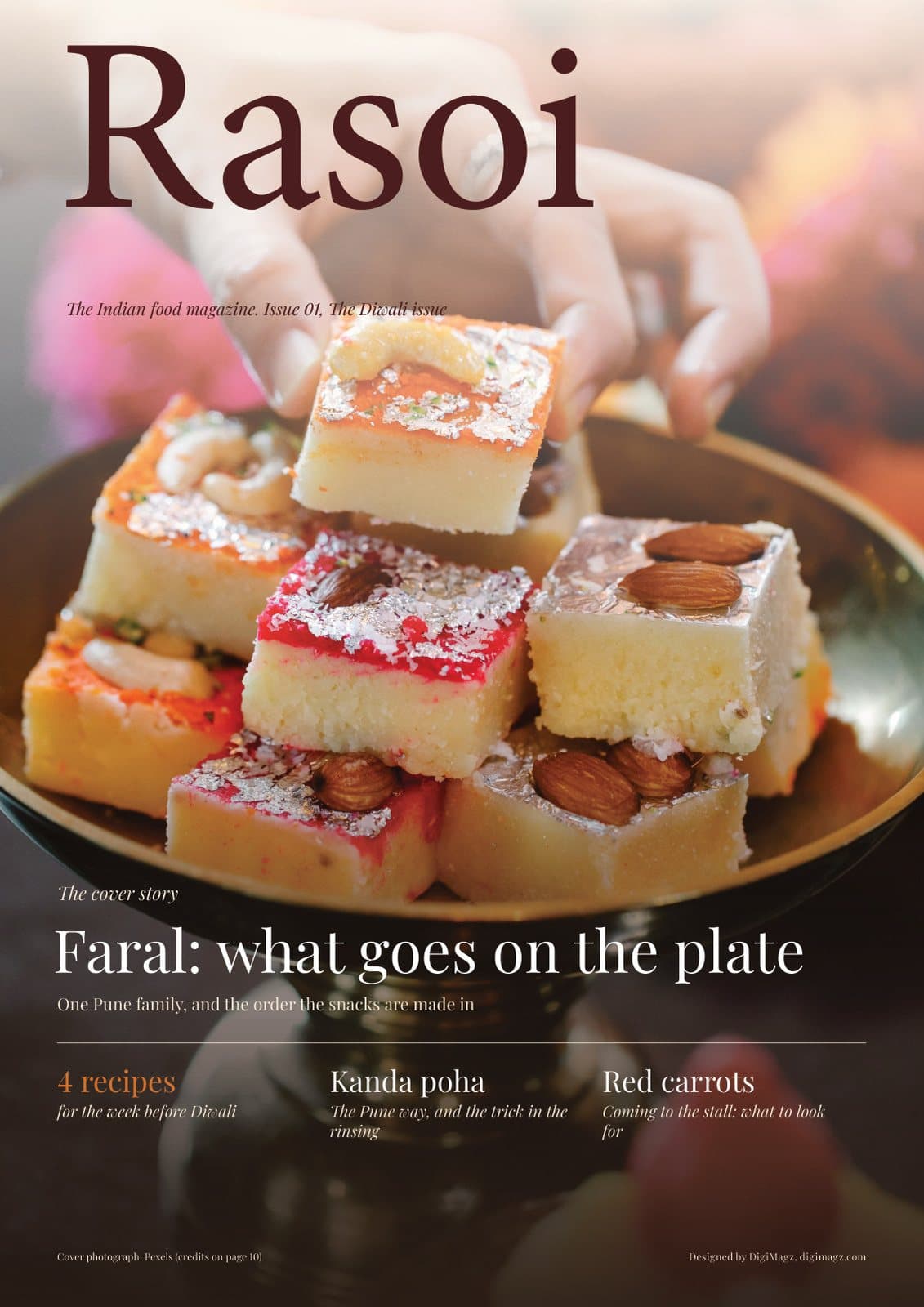
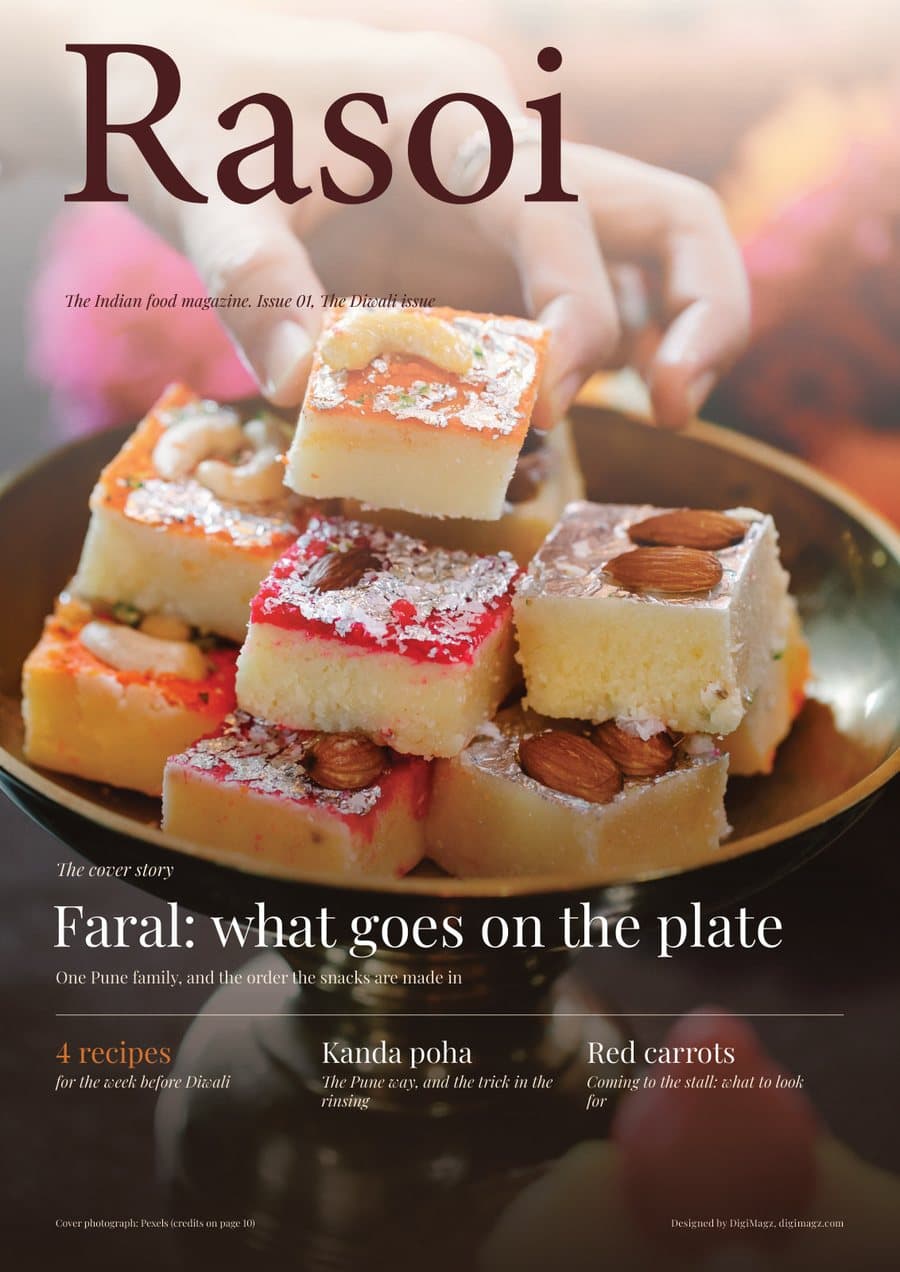
Rasoi is a sample issue from our studio: a food magazine for Indian home cooks, made for the week before Diwali. It shows what a complete issue from us looks like, not just a cover.
The design follows the habits of good independent food magazines: a colour for every section, a calm serif from cover to back page, a full photograph after every page of text, and recipes that tell you how long they take and how many they serve before you start cooking.
- Format
- Food magazine
- Extent
- 12 pages
The whole issue · 12 pages
Turn the pages.
Drag a page corner, tap either side, or use the arrow keys. Switch on the designer’s notes to see why each page is built the way it is.
Page by page
- 1. Cover
- 2. Contents and editor's letter
- 3. Full-page photograph
- 4. Breakfast: kanda poha
- 5. Recipes: kanda poha and aloo paratha
- 6. Market: red carrots and greens
- 7. Feature: faral, the Diwali plate
- 8. The Diwali plate in pictures
- 9. Recipes: besan ladoo and shankarpali
- 10. The masala dabba, team and credits
- 11. Inside back cover: the DigiMagz studio page
- 12. Back cover: a DigiMagz advertisement
Decisions
One colour per section
Breakfast is saffron, the market indigo, Diwali sindoor red and the kitchen plum. Each section opens with a coloured tab running off the page edge, and the contents page is grouped under the same colours, so a reader finds a recipe by colour before reading a word.
Cover lines on the photograph, not on a panel
The cover type sits straight on the dark lower part of the photo, left-aligned: one lead story and a row of three, with a number as the hook. No floating boxes; the picture was chosen for where the words would go.
Recipes you can cook from
Every recipe gives servings and time first, quantities in bold, ingredients apart from the numbered method, and one tip. Numbers are full-height figures, so 20 never reads as '2o'.
Text page, photo page
After every page of reading comes a full photograph: the kitchen, the dish, the plate. Text runs to the foot of every page; photographs are sized to the space the words leave.
Indian kitchens, Indian words
Cups and spoons, kadhai and tawa, atta and besan; months instead of seasons. Every photograph is of Indian food and Indian kitchens, licensed and credited on the last page.
More work
- Nature
- Frontiers
- Agriculture
- It's My Day
- Pune Fashion Trends
- Tarangini Industries
- The Hour
- Homecoming
- Ninety Years
- Saat Phere
- Sehat
- The Banyan
- aangan
- Kaveri Softworks
- Second Innings
- Taal
- Vivah
- Safar
- Noor
- Sitara
- Sonchafa, Baner
- Sanjha Woodworks
- The Tanvi & Arjun Chronicle
- Panghat Foundation
- Prakaar
- Tej
- Field Heat
- Field Heat, the letter
- Jharokha, the letter
- Jharokha
- Prahar, Koregaon Park
- Nuajibana Trust